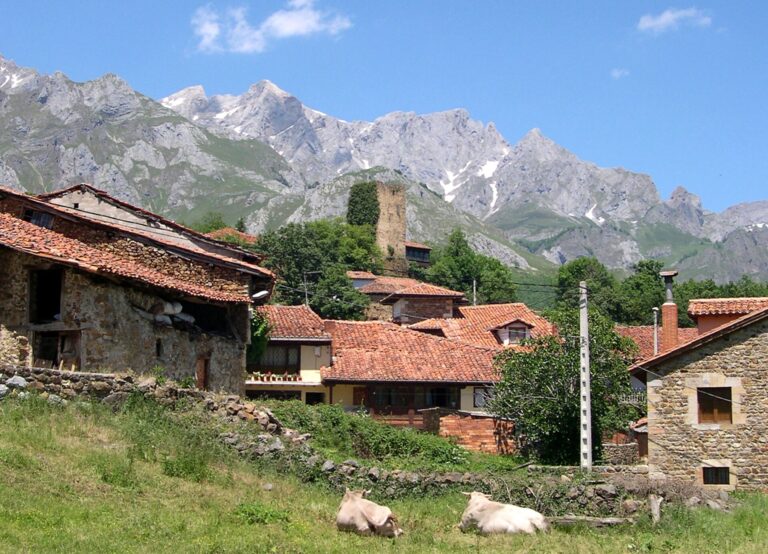
The Deva Basin and Its Valleys
The Deva rises at Fuente Dé, in Camaleño, and crosses Liébana and the La Hermida gorge before forming the Tina Mayor estuary. Its basin brings together rivers rising in the Picos de Europa and the Liébana mountains; part of the system, including the Cares, continues through Asturias and León. This guide distinguishes the Deva’s direct tributaries from rivers belonging to the Cares sub-basin.
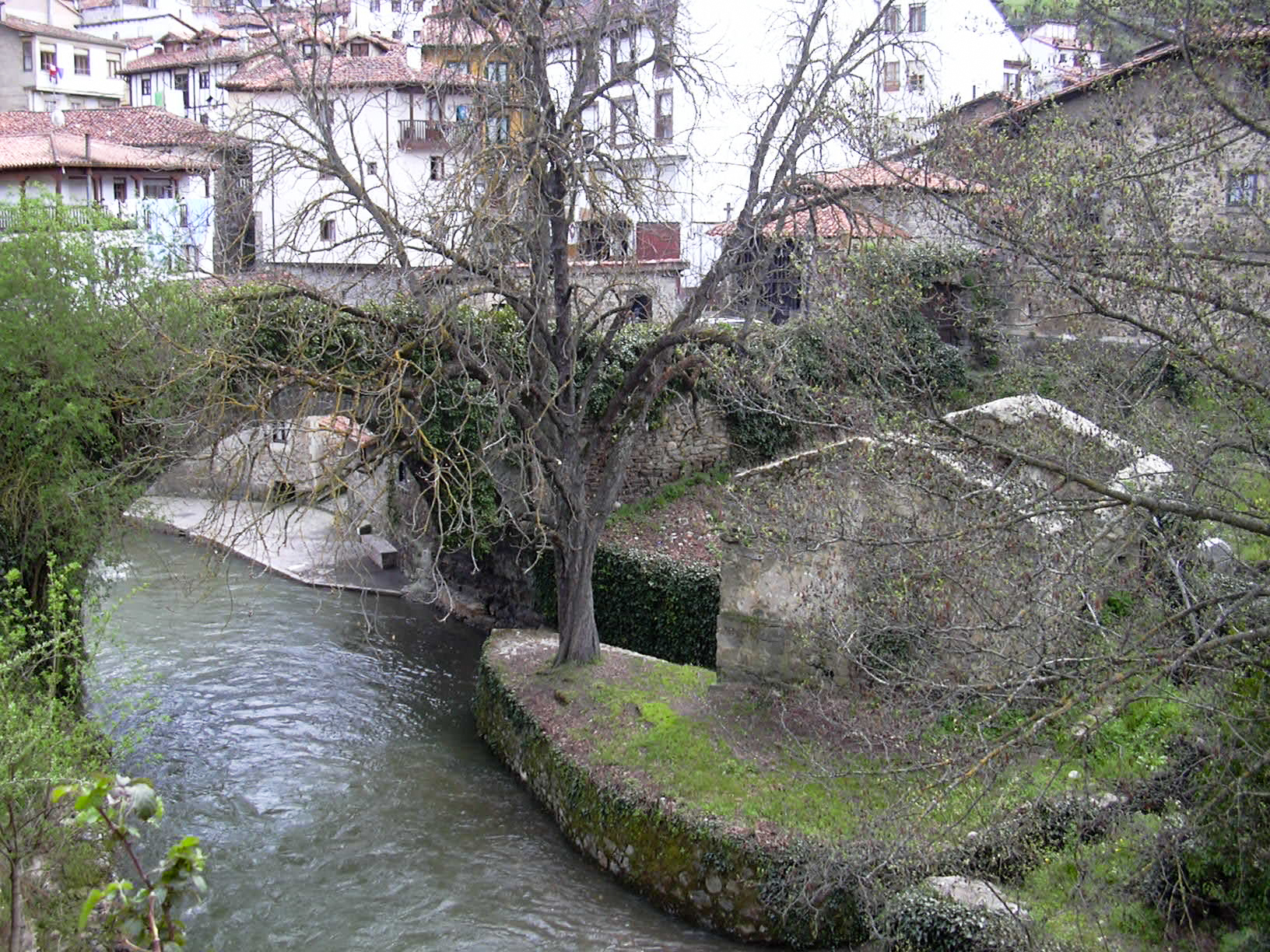
The Deva at Potes. Photograph by David de Obregon Sierra, CC BY-SA 4.0 licence (licence). Wikimedia Commons file.
Main river
- Deva River ES: source, course through Camaleño and Potes, gorge, lower course and estuary.
Main tributaries
- Quiviesa: direct right-bank tributary; rises at San Glorio, crosses Vega de Liébana and joins the Deva at Potes. Regional sources give conflicting lengths (18 and 25 km), which remain unresolved.
- Vejo River ES: descends from San Glorio by the village of Vejo and reaches the Quiviesa at Vada; its precise spring and minor tributaries need further documentation.
- Friero River ES: short course in Ledantes, mapped as joining the Quiviesa beside the Viña stream; its exact headwaters and minor tributaries are unconfirmed.
- San Andrés de Ledantes River ES: headwater river that joins the Valtiero stream near La Pisa. Official records call the resulting course Las Viñas stream, within the Quiviesa sub-basin.
- Bullón ES: direct right-bank tributary, descending from the Pesaguero headwaters through the Cabezón de Liébana valley to Ojedo. Its page separates confirmed tributaries from waterways still to be verified.
- Vendejo River ES: rises in the upper Caloca valley below Peña Bistruey and joins the Bullón at Pesaguero; minor tributaries remain to be checked.
- Román River: flows through Valdeprado near Piasca and joins the Bullón; its precise source and named tributaries are unconfirmed.
- Aniezo River ES: mountain watercourse in Valdeaniezo, listed with Bárcena stream in the Bullón Natural River Reserve; it reaches the Bullón system near Cambarco. The reserve’s name does not mean Aniezo is a stretch of the Bullón.
- Frío River ES: Quiviesa tributary, rising at the Riofrío passes and joining it at La Vega. Its system includes the Bo, Entreovejas and Requejada rivers (the latter described below); minor tributaries and headwater details still need checking.
- Bo River ES: descends through the Hoz de Valcayo and joins the Frío; its exact spring is unconfirmed.
- Entreovejas River: mountain course below Pico Corcina, crossing the old path between Bárago and Cucayo before joining the Frío. Its precise source and named tributaries are unconfirmed.
- Requejada River ES: rises in the Cordillera below the Peña Bistruey area and descends a ravine to the Frío near Cucayo; named tributaries remain unverified.
- Urdón ES: direct left-bank tributary, rising at Fuente del Nacimiento, a karst spring in the Ándara massif, and descending through its namesake gorge to the Deva. PR-PNPE 30 to Tresviso is exposed and steep; the source should not be treated as an easy walk.
- Sobra River ES: upper reach of the Sobra–Urdón system in Tresviso. Documented inputs include Valdediezma, Riega del Tormo and Los Lobos before the river continues as the Urdón. No precise spring has been confirmed.
- Viñón River: short mountain course from slopes near Viñón to the Deva by Tama. Its headwaters are diffuse and no named tributaries are confirmed.
- Cares: major left-bank tributary joining the Deva in Asturias; its source is in Valdeón (León). One tributary is the Duje ES, which rises at the Áliva passes, crosses into Asturias and joins the Cares at Poncebos. The Casaño also belongs to the Cares sub-basin; neither river is a direct Deva tributary.
Other rivers with their own guide
- Lera River ES: flows through the Cosgaya valley into the Deva. Its source is associated with Vegarandi/Vegarrende, but no precise spring or confirmed named tributaries have been identified.
- Cubo River: descends from the Peña Llesba and Prao Cubo area to Areños, where it joins the Deva. The waterfall route is a hiking description, not an official trail; local place-names suggest El Gustal may be a tributary.
- Rejo River: headwater course below Coriscao, mapped as joining the Cubo. Its precise spring is unidentified and smaller streams require further verification.
- Salvorón River: mountain watercourse around Pido and Las Bárcenas. Sources disagree on whether Salvorón/Pontesqué joins the Cantiján or flows directly into the Deva; local variants are retained.
- Peñalba River: rises on the Cordillera at the mountain of the same name and joins the Deva from the right near Las Ilces. PR-PNPE 26 follows the Peñalba valley and Las Ilces area, but is not a riverside path.
- Burón: begins where the río de las Blancas meets the Arredondas channel, descends through Lon and reaches the Deva at San Pelayo.
- Mancorbo: gathers water from the San Carlos and Novillos channels, crosses the Argüébanes valley and joins the Deva near Turieno.
- Seco or Belondio River ES: formed by several channels between Morra de Lechugales and Cámara pass; it descends through Redo and Tanarrio to the Deva.
- Los Secos River ES: a mapped place-name in Polaciones geometrically connected to the Deva system; do not confuse it with Seco or Belondio. Its immediate receiving stream and exact source remain unverified.
- Trespalacios River: rises at Cumbre Abenas, forms the Pembes valley and joins the Deva on its left bank.
- Lamedo River ES: tributary of the Bullón draining the Valderrodíes valley; it passes San Andrés and joins the Bullón from the right.
- Corvera River: rises in La Llaúna valley, crosses Puertu las Brañas and Bejes, then descends a gorge to the Deva at La Hermida; it receives the waters of Pranieve and Pelea.
- Nevandi River ES: rises around Salgardas in the Áliva passes and descends beside the mountain track to Espinama, where it joins the Deva on the left. No verified list of its own tributaries is available.
- Cantiján River ES: headwater course locally associated with Peña Remoña, Somo and Pido. Sources disagree on whether Somo and Melendro are reaches of the Cantiján or separate streams joining it.
- La Sorda River ES: rises at Cuevalagua spring below Canchorral de Hormas, crosses Colio valley and reaches the Deva near San Francisco. Also known as Colio or San Lorenzo River; the headwater location is uncertain, and visitors should not follow it upstream without preparation and local advice.
- Castrejón River: Ledantes watercourse with headwaters in the Cubil del Can valley and a restored path towards the Riofrío passes. It belongs to the Deva system; its immediate sub-basin and confluence remain unresolved because of possible confusion with the Castrejón of Valtiero.
- Santo de Bedoya River ES: flows through Bedoya valley from the Peña de las Segás area to the Deva at Castro Cillorigo. Its precise spring, named tributaries and total length are not settled; PR-S 88 provides a documented way to explore part of the valley.
The map inventory assigns 34 rivers to the Deva system; each has an individual guide linked here. Assignment to a water-management system does not mean every river flows directly into the Deva: each river page distinguishes that hierarchy and flags only those headwaters or confluences that sources cannot establish.
Places to discover in the basin
- Fuente Dé ES and the upper Deva basin.
- Camaleño, with its upper valley and mountain villages.
- Potes, where the Deva and Quiviesa meet.
- The La Hermida area and Urdón valley; check pedestrian access locally.
- Val de San Vicente ES and the Tina Mayor estuary.
- International Deva River Descent ES, a seasonal event whose dates and conditions must be checked each year.
Editorial status: individual guides to all 34 rivers assigned to the Deva system are linked from this page and the regional index. Uncertainties about smaller tributaries, exact springs and access are stated in the relevant guides; check opening information, restrictions and trail conditions before visiting.