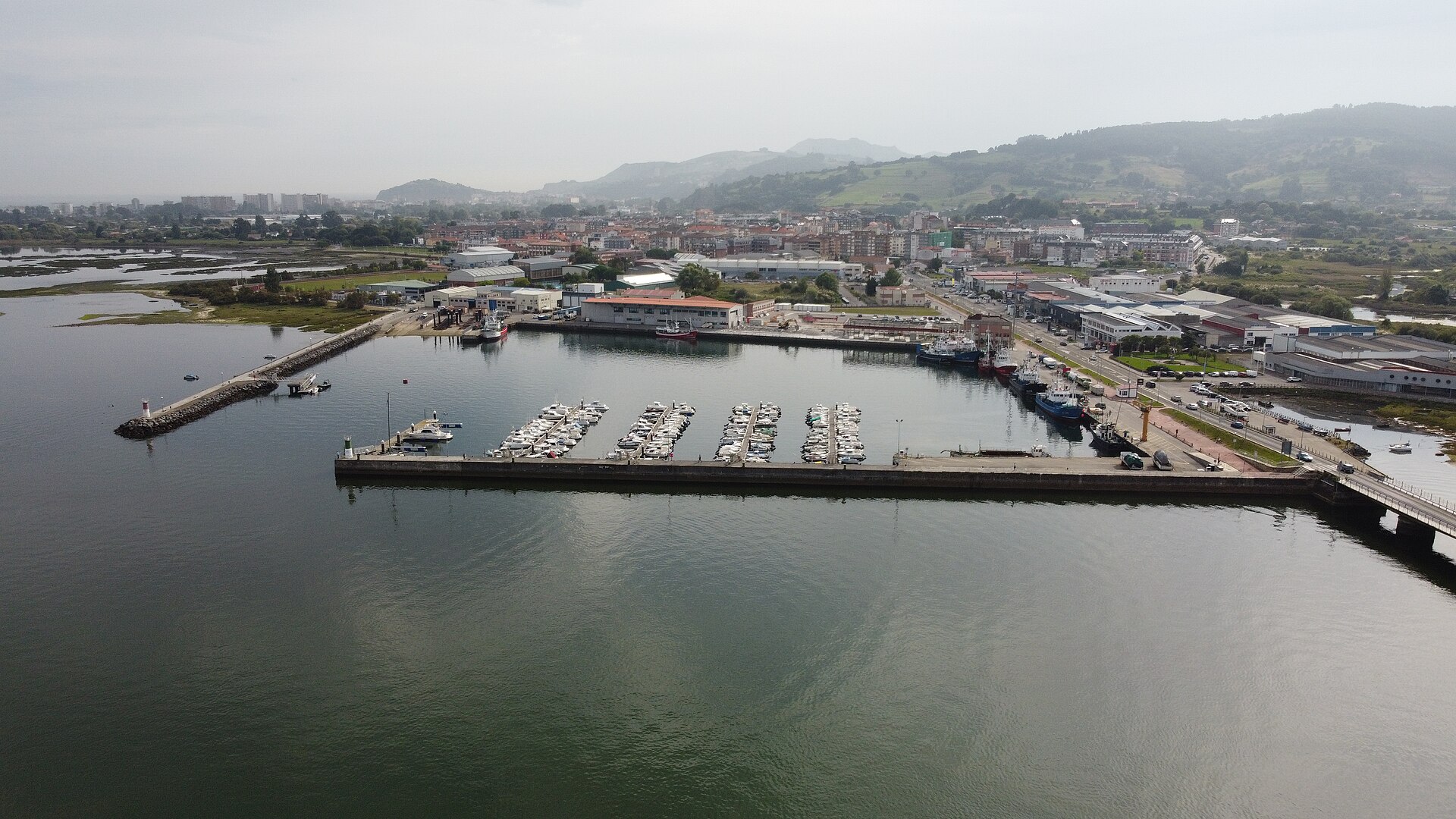
Fishing Port and San Ginés Fishermen’s Guild in Colindres
The present port is at the centre of Colindres’s fishing activity and an essential part of its seafaring identity.
Key details
| Location | Colindres |
|---|---|
| Municipality | Colindres |
| Type | Maritime culture |
| Access | Working port; access only to public areas |
Local history records fishing and exports of sardines and sea bream from the 17th century. In the 19th century, fishing families, boats and pickling factories supported an economy that needed a better-protected harbour. After several proposals, the port project was approved in 1933, transforming the town’s relationship with the estuary. The San Ginés Fishermen’s Guild remains connected with the port and patron-saint celebrations. In 2023 the Eastern Coastal Action Group documented the active fleet and fish-market activity; those figures are historical and should not be treated as current statistics. The Guild remains a workplace and centre of coordination and memory for the sector, not a museum advertised for unrestricted visits. The tourist walk “A walk around the port” links Venta Vieja, the port, Venta Nueva and the former shipyard. Observe activity only from permitted areas: do not cross working quays, approach vessel manoeuvres or interfere with unloading. The route may cease to be pedestrian once it enters the port compound; follow signs and staff instructions. San Ginés is the Guild’s patron saint, with celebrations around 25 August. The Diocese reported a Mass at the fish market in 2026. The Día de la Marmita and other events are scheduled as part of the festivities and may vary from year to year. Check dates, access restrictions and times with municipal sources before visiting.
Plan your visit
This is an active port. Walk only in public areas and respect ongoing operations.
Access
An exterior view does not mean a building or area is open to visitors. Check current use and respect private property.
A port that transformed the town
Fishing has been part of Colindres’s history for centuries. The municipal guide records exports of sardines and sea bream as early as the 17th century. By the mid-19th century, around eighty families depended on fishing, while several pickling factories processed the catch. Activity grew, but there was no protected harbour: boats were moored by breakwaters or among reed beds, exposed to storms and poorly placed for loading and unloading. The modern port addressed those limitations and reshaped the waterfront.
From proposal to infrastructure
The tourist source recalls proposals to improve the harbour from 1846 and further efforts in the early 20th century. The construction project was approved in 1933 after decades of requests from fishers and local authorities. This chronology comes from the municipal account and helps explain why port infrastructure became central to Colindres de Abajo. In the 21st century the harbour is still a workplace, so its quays and fish market should not be treated as a free-entry museum.
The San Ginés Fishermen’s Guild
The San Ginés Fishermen’s Guild helps organise the sector and remains closely tied to local life. Municipal information dates the current Guild to 1978, following earlier phases of maritime associations. San Ginés is celebrated around 25 August. The town’s programme may include events at the fish market, music, local groups and the Día de la Marmita. Dates and formats change each year; consult the current official programme.
The memory of the Treto ferry
Before the bridge, the crossing between Colindres and the Treto shore was made by ferry. The municipal tourism source describes the service’s role in moving people, goods and pilgrims. After several proposals and navigation difficulties, the swing bridge opened in 1905. The bridge has its own page in the Bárcena de Cicero guide because it connects two municipalities. From Colindres, visitors can view the estuary and understand the historic crossing, while distinguishing the old bridge from the modern structures carrying today’s road.
What visitors can see
The tourist walk around the port links Venta Vieja, the harbour, Venta Nueva and the memory of the shipyard. Not every part is pedestrian or open to the public. Use the promenade and marked viewpoints; do not enter closed pontoons, approach boat manoeuvres or interrupt unloading. Fishing activity may be easier to see at certain times, but no guaranteed public viewing hours for auctions or fish-market work are published. Ask before approaching and follow staff instructions.
A visit shaped by tides and neighbourhoods
The port shares its landscape with the estuary. Check weather and tides if you plan to combine a walk with birdwatching. There is no need to enter muddy intertidal areas: the public route offers views of the relationship between fishing and wetland habitats from safe paths. The Alameda, music kiosk and Modernist villas are in the same urban area; Colindres de Arriba’s historic quarter can be visited separately. Together these places show how the maritime economy influenced the town’s growth.
Working life is part of the experience
The port may be busy at some times and quieter at others, but the information reviewed does not publish visitor or auction hours. Plan this as an outdoor walk and give priority to port operations. If San Ginés is being celebrated, check the event boundaries and whether the fish market is accessible. The town council publishes a programme for each edition, and its events may differ from the previous year. A responsible visit lets you appreciate fishing without interrupting the people who work there.
More to see in Colindres
This guide is part of the Colindres collection. Explore other places, routes and celebrations linked to the town:
- Church of San Juan Bautista in Colindres
- Palace of the Infantado or Condestable
- Colindres Cultural Centre
- Church of Our Lady of Mount Carmel
Return to Colindres town or the municipal guide to Colindres.
Sources: Consult source ↗, Consult source ↗ and Consult source ↗.