Church of San Juan Bautista in Colindres
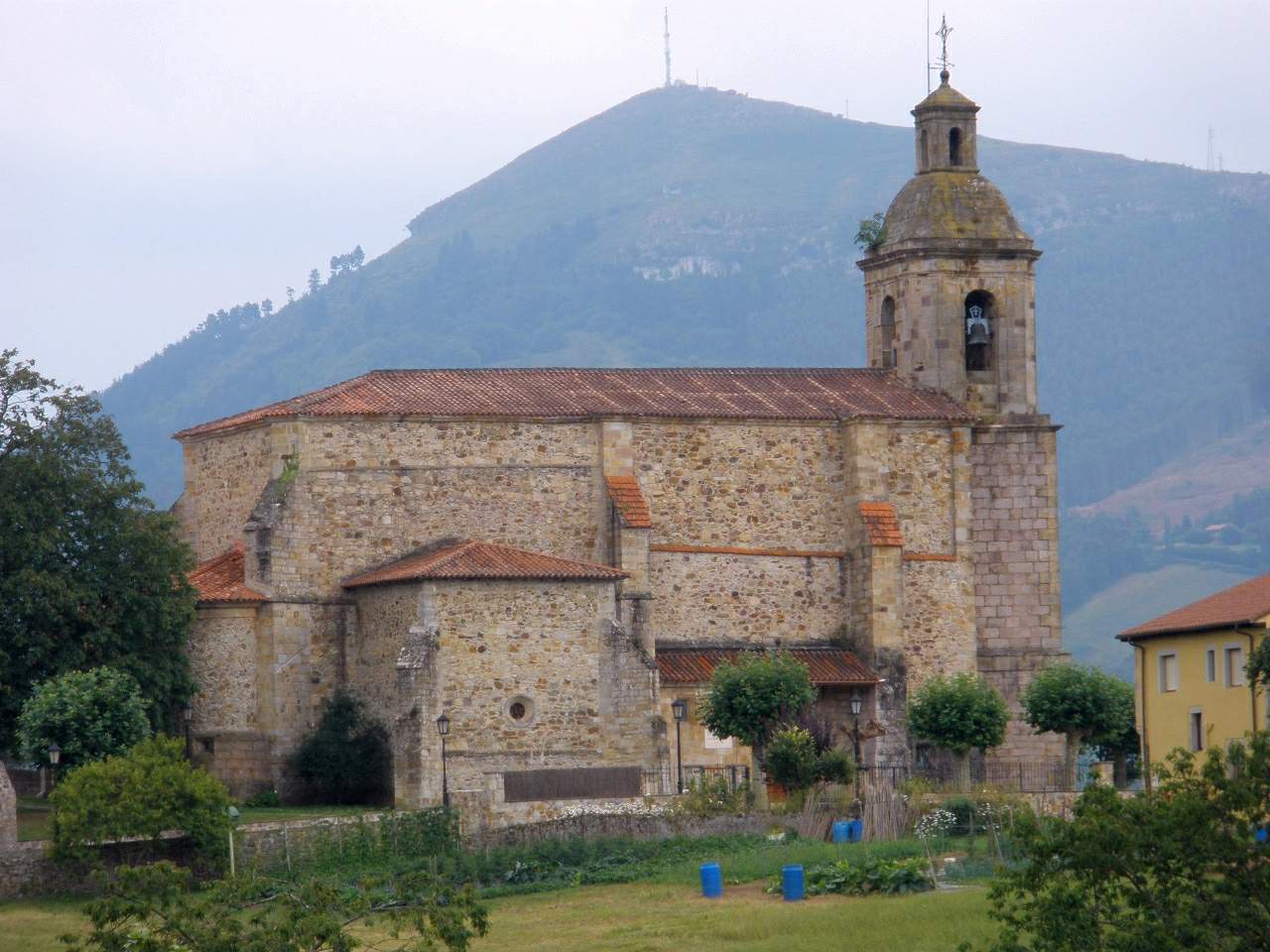
The Church of San Juan Bautista stands in Colindres de Arriba, beside the site of a medieval monastery and the historic Camino Real.
Key details
| Location | Colindres de Arriba, Colindres |
|---|---|
| Municipality | Colindres |
| Type | Religious heritage |
| Access | Active place of worship; interior access to be confirmed |
The municipal tourist office attributes the present building to Juan López de la Gándara Cueva and Pedro de Hazas, with Pedro de Nates overseeing the work between 1579 and 1604. The history of an earlier church, dedicated to San Jorge and San Juan, is placed in the 10th–11th centuries. Later rebuilding means the present church should not be described as an intact building from that period. It has a single nave, polygonal apse and side chapels. The tourism source highlights a pointed doorway beneath the bell tower, a baptismal font that may be medieval, walnut choir stalls associated with the former monastery, an 18th-century sacristy and a two-faced sundial. These details come from the local guide; items the guide calls possible should not be given a definite date. A pilgrims’ hospital from the first half of the 16th century once stood near the church; the guide says only one column remains. The setting connects religious life, the town council and the Jacobean route. The church remains in religious use, and an interior visit should be arranged with the parish.
Plan your visit
Active place of worship; check opening times before setting out.
Access
An exterior view does not mean the church is open to visitors. Check current use and respect private property.
A church built on an earlier site
The local tourist guide places the church in the San Juan quarter of Colindres de Arriba and says it was built on the site of the former monastery of San Jorge and San Juan. The reference to the 10th and 11th centuries concerns the medieval institution, not the building we see today. According to the same source, construction of the present church took place between 1579 and 1604, with local stonemasons and Pedro de Nates overseeing the work. This extended building period helps explain why the church brings together features from different phases.
What to look for in the architecture
The municipal description identifies a single nave, polygonal east end and side chapels. From outside, notice the compact scale, stonework and mass of the tower. The guide draws attention to a pointed doorway preserved beneath the bell tower, although the many rebuildings make it difficult to assign every visible feature to a single date. An exterior visit shows how the church fits into the streets of the old quarter without entering parish spaces or neighbouring properties.
The altarpiece and other interior features
Tourism information mentions an early 17th-century Romanist altarpiece and thirteen walnut choir stalls associated with the former monastery. It also refers to an 18th-century sacristy, a baptismal font whose age is described only as a possibility, and a two-faced sundial. These details come from the municipal guide rather than a recent online art inventory, so this page does not interpret or confidently date each object. The interior can be visited only when the parish allows access, and visitors should respect services and the church’s instructions.
Church, town council and the Camino de Santiago
The site served purposes beyond worship. The tourist office links the church and monastery with the area where the medieval council met and records a former pilgrims’ hospital beside the church. Colindres lay on the Camino de Santiago de la Costa: some pilgrims stopped at San Juan before continuing to the Magdalena chapel and taking the Treto ferry. The church therefore helps tell a story of local government, hospitality for travellers and movement across the estuary. This does not imply that the hospital survives as a complete building.
Adding it to a walk
The church fits naturally into the Ruta de las Casonas. The official route connects it with towers, manor houses, the Hedino washhouse and the chapel of San Roque. Several stops are private homes and should be viewed from the street. You can explore only the San Juan section or continue through the historic quarter; check paving, slopes and any works on the day. The tourist leaflet is older, and its distance and duration are estimates, not a guarantee of current signs or accessibility.
Visiting respectfully
Before travelling specifically to enter, confirm opening times and services with the parish or town council. Churches may be closed outside services, and schedules vary by season. If you arrive during a ceremony, avoid photographing worshippers and keep quiet. Look for Calle San Juan and park only in permitted spaces, without blocking residents’ access. The Colindres de Arriba guide describes nearby sites, while the municipal guide explains how the town’s two quarters connect.
Within the historic ensemble
As you explore San Juan, notice the streets leading towards the old Camino Real and the nearby manor houses. The church is not an isolated stop: it stands in the area associated with the town council, the former monastery and the pilgrims’ hospital described by the local guide. These relationships help explain the organisation of the historic town, but they do not justify reconstructing vanished buildings without evidence. Continue towards the manor houses to compare periods, then leave time for the port and marshland landscape.
More to see in Colindres
This guide is part of the Colindres collection. Explore the other places, routes and celebrations linked to the town:
- Palace of the Infantado or Condestable
- Colindres Cultural Centre
- Church of Our Lady of Mount Carmel
- Manor-house route of Colindres de Arriba
Return to Colindres town or the municipal guide to Colindres.
Sources: Consult source ↗, Consult source ↗ and Consult source ↗.