Medieval Torrelavega: a community before the lordship
Documentary research by Jesús Ángel Solórzano Telechea, published in 2026, brings together 59 medieval documents held in nine archives and libraries. The study cites as the earliest known record two residents of La Vega who appear as witnesses in 1299; the collection transcribes documents dated from 1315 to 1533. This evidence describes an already organised local community and qualifies older accounts that attributed its foundation solely to a member of the de la Vega family.
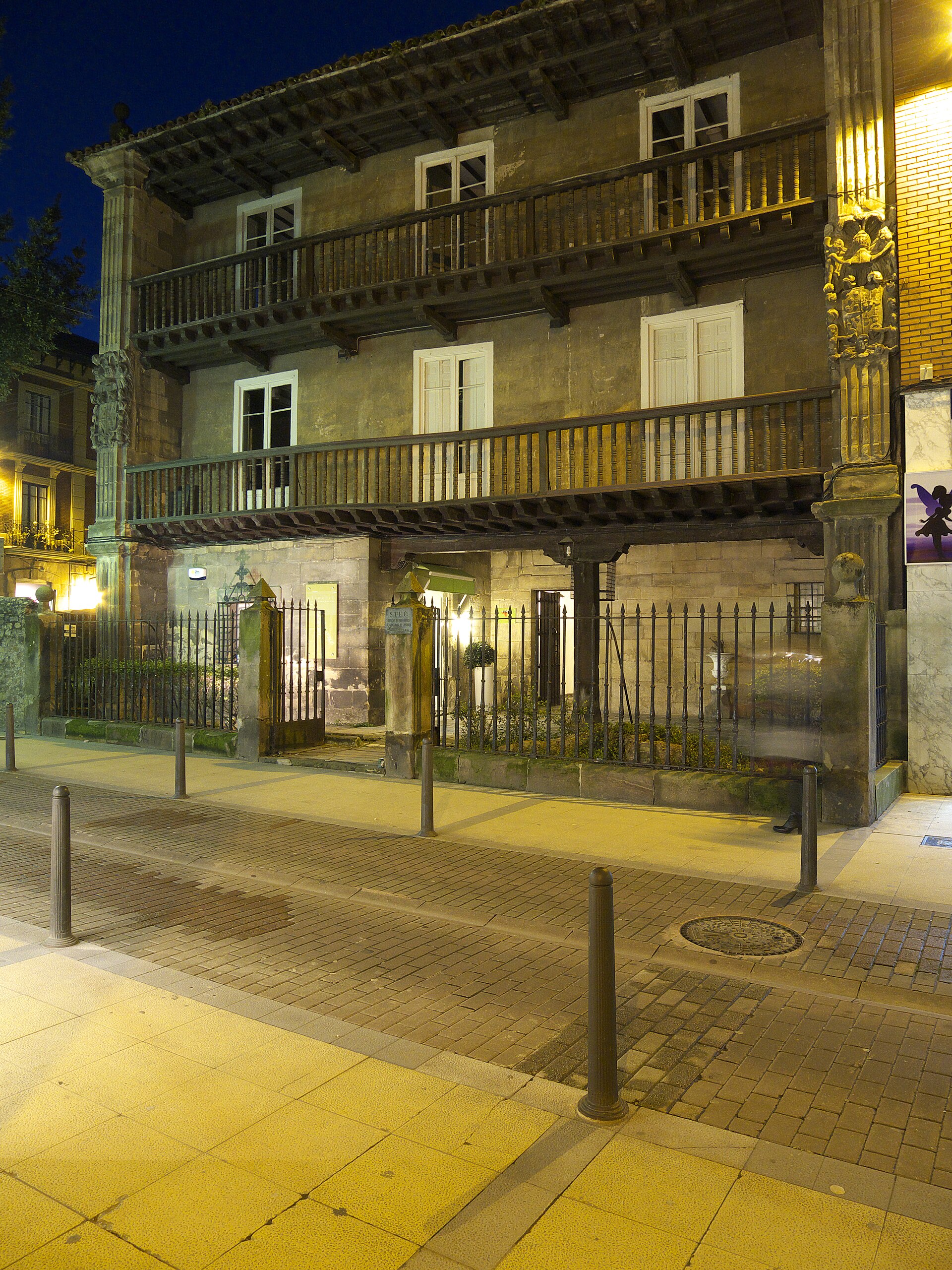
The book explains the consolidation of the House of La Vega and the site’s growing administrative importance: an agreement dated 1 November 1403 established Torrelavega as the judicial seat of the lordship. The tower and manor house formed part of this historical landscape, but municipal sources treat their date and authorship cautiously. The Tower of La Vega is hypothesised to date from the late 13th century, by order of Garcilaso de la Vega, or from the early 14th century, under Leonor de la Vega. These alternatives should remain hypotheses, not a proven foundation date.
City squares and buildings
Pasea Torrelavega documents civic buildings, churches, squares, markets and cultural centres. This guide distinguishes places that still exist from buildings that have disappeared or are being transformed.
Industrial memory
Solvay, Sniace, La Lechera, the mills and company-built housing explain the municipality’s growth. Industrial sites and occupied homes are not presented as places for interior visits.
Architecture in the villages
Viérnoles is known for its manor houses and San Román Church; Campuzano for San Miguel Church; and Barreda for the SNIACE workers’ settlement and schools. Their individual guides provide further detail.
The folklore of Tanos
The square beside the Civic Centre and Los Picayos Auditorium commemorates José Miguel Guerra Revuelta and his work with the Virgen de las Nieves Dance Group. The 1517 account of the group’s origins is a tradition identified as such by the group’s own sources; it is not a verified foundation date.
San Pelayo in Duález
The Diocese identifies the parish church of San Pelayo in Duález; the parish archive preserves records from 1861 to 1896. No source has been found for dating the building, and no tourist opening hours are published.
San Martín in Ganzo
A provisional municipal catalogue entry describes the stone church and its tower; the Diocese confirms that the parish is active at Plaza de San Martín. Final approval of the local development plan remains pending.
San Blas in La Montaña
The municipal archaeological catalogue describes the church as late Gothic and records a possible medieval Christian site. A report about stone-slab graves associated with the cemetery has not been independently verified.
El Salvador Church in the SNIACE workers’ settlement
The municipal heritage leaflet describes the central square of the original SNIACE settlement, with homes, arcades, a civic centre and a church. Luis Alberto Alonso Ortiz’s study dates construction of the church to 1948–1951. The local development plan describes the church as a landmark and details its portico. The attribution to Federico Cabrillo applies to the urban plan; it has not been established for the church itself. The Diocese confirms worship but does not publish tourist opening hours.
Our Lady of the Snows Parish Church in Tanos
The Diocese identifies Nuestra Señora de las Nieves as the parish church of Tanos, on Avenida José Gutiérrez Portilla. It is a different building from the Hermitage of Santa Ana, which is also associated with July festivities.
Church of Saints Justus and Pastor in Sierrapando
The municipal catalogue describes a stone church with an L-shaped plan, bell tower and round arches. The postal address differs between the catalogue and the Diocese; Plaza de La Llana is given here without a street number.
Convent of San Luis and San Fernando in Sierrapando
The Diocese confirms the community of Discalced Carmelites; the official website describes their contemplative life and shop. The municipal catalogue identifies the enclosed grounds as private. An external directory labels an opening time as “Visits”, but the official website describes it as shop opening hours. Confirm access directly.
San Pedro Parish Church in Torres
Historical press records its inauguration and consecration in 1930 and attributes its construction to the Royal Asturian Mining Company. The Diocese identifies the current parish; a licensed exterior photograph dates from 2023.
Our Lady of the Miracle Hermitage
The municipal cultural guide identifies it as a heritage site in Torres, outside the main map; the Diocese confirms that the 8 September procession reaches its chapel. No tourist opening hours have been confirmed.
Four Spouts Fountain
The design of the fountain that survives today, on Calle Julián Ceballos, is attributed to architect Deogracias Mariano Lastra and dated to 1928. The town council documents the square’s redevelopment, which opened to the public in 2024. The water supply is not assumed to be operational today.
The former La Lechera factory
The Azucarera Montañesa, the dairy industry and the former exhibition centre are successive chapters in an industrial complex declared a Site of Cultural Interest in 2020. In September 2026, works for the Arts Centre were still linked to future relocations; no public tourist opening had been confirmed.
Archangel Michael Church in Campuzano
A modern building by Ricardo Lorenzo, listed as a Site of Local Interest in 2010. Its oval plan, inner garden, circular baptistery and exposed-concrete roof distinguish it within regional religious architecture. Confirm interior access with the parish.
The Puff Pastry Museum
The museum was installed in the municipal building at number 4, Plaza Baldomero Iglesias. The visit in August 2026 was for guild members; check with the town council for recent confirmation before planning general public access.
- Torrelavega Puff Pastry Museum (Spanish page) ES
- Baldomero Iglesias Square (Red Square) (Spanish page) ES
The unfinished Sacred Heart Church in Mies de Vega
The present church is not the project by Luis Moya preserved at the UPM: that design was never built. The later church, whose design is attributed to Luis Castillo Arenal, was left unfinished. Tourist access has not been confirmed.
Velarde Palace and the House of the Juan Velarde Entailed Estate
In Herrera these are two separate buildings. The Official Gazette of Cantabria included Velarde Palace in the General Inventory in 2010 and confirms that the House of Juan Velarde had already received Site of Local Interest protection in 2002. The palace guide and the historical guide to the entailed-estate house preserve this distinction and their separate heritage designations.
- Velarde Palace in Viérnoles (Spanish page) ES
- House of the Juan Velarde Entailed Estate (Spanish page) ES
Vía del Grillo bridge
The small bridge preserves the memory of the metre-gauge railway link that connected Torrelavega and Sierrapando stations from 1905. The town council places it today in a roundabout designed by Pedro Sobrado Pintor; it is not a bridge for crossing.
Geloria and funerary heritage
Geloria Cemetery, also known as La Llama, preserves graves and family tombs connected with the city’s history. The town council has organised heritage days with guided visits in specific years; no regular calendar has been confirmed. This remains a place of mourning and should be visited respectfully.
Theatre and performing arts
The Concha Espina Municipal Theatre presents shows, festivals and family activities in specific seasons. Check the programme and access conditions before planning a visit; no permanent architectural tour has been confirmed.
Street art and the Okuda mural
The 2021 mural at Coorcopar’s headquarters interprets Torrelavega through references to its origins, industry and nature. The municipal tourist map brings together this and other outdoor artworks.
Our Lady of Peace School and Church
A modern school complex by Coello de Portugal, with a sculptural façade by Subirachs, protected as an Inventoried Site. It can be viewed from outside; the premises are not open for unrestricted visits.
El Malecón and sporting history
Home of Gimnástica since 1922, on a site associated with the Besaya river wall. The interior is accessible during matches and announced events; no tourist opening hours have been confirmed.
Severino Prieto Bowling Alley
Known locally as La Bolerona, the bowling alley connects bolo palma with the city’s sporting and festive life. The interior is experienced during matches and announced events; no permanent tourist opening hours have been confirmed.
Sources: View source ↗, View source ↗, View source ↗, View source ↗, View source ↗, View source ↗, View source ↗, View source ↗, View source ↗, View source ↗, View source ↗, View source ↗, View source ↗, View source ↗, View source ↗, View source ↗, View source ↗, View source ↗, View source ↗, View source ↗, View source ↗, View source ↗, View source ↗, View source ↗, View source ↗, View source ↗, View source ↗, View source ↗, View source ↗, View source ↗, View source ↗, View source ↗, View source ↗, View source ↗, View source ↗, View source ↗, View source ↗, View source ↗, View source ↗, View source ↗, View source ↗, View source ↗, View source ↗, View source ↗, View source ↗, View source ↗, View source ↗, View source ↗, View source ↗, View source ↗, View source ↗, View source ↗, View source ↗, View source ↗, View source ↗, View source ↗, View source ↗, View source ↗, View source ↗ and View source ↗.