Church of San Martín de Tours in Cigüenza
In Cigüenza, a short distance from Novales, the Church of San Martín de Tours stands out for its twin towers and a history linking this village in Alfoz de Lloredo with Lima. Juan Antonio de Tagle Bracho, a native of Cigüenza who made his fortune in the Americas, promoted the construction of the church in the eighteenth century. It was declared an Asset of Cultural Interest, with Monument status, in 1992.
Essential information
| Location | Cigüenza |
|---|---|
| Municipality | Alfoz de Lloredo |
| Type | Church |
| Access | From public spaces |
History and details
Planning your visit
No permanent tourist opening is advertised. Check visiting times with the responsible body and respect worship.
Access
Being able to view the outside does not mean that the building or grounds are open to the public. Check current use and respect private property.
A project shaped between Cigüenza and Lima
The project is attributed to Juan Antonio de Tagle Bracho, who made his fortune in Peru, became prior of the Lima Consulate and was a knight of the Order of Calatrava. From Lima he promoted a substantial church for his birthplace. The municipal guide explains that he wanted to bring to Cigüenza a model he had seen in Lima: the church of the Capuchin nuns.
His brother Francisco, a priest in Toñanes, took part in carrying out the project. The former municipal tourism portal dates the start of construction to 1743 and says the work lasted twenty years; it also identifies José Sordo Molleda as the master stonemason. An older Viajar por Cantabria page, by contrast, placed the start around 1748. The current institutional listing confirms an eighteenth-century date but gives neither those dates nor the stonemason’s name. Until construction records resolve the difference, 1743 should be presented as the date given by the former tourism portal, while 1748 remains a discrepancy in this website’s historical text rather than an established fact.
Juan Antonio de Tagle Bracho died in Lima before the church was completed. This website’s historical account says that his sister Marta provided funds to continue the work. The Town Council confirms the founder’s connection with Cigüenza and his emigration to Lima, but does not detail this final financing; the episode is therefore retained as part of the older account, not as a fact confirmed by the municipal listing.
A Baroque church with a distinctive presence
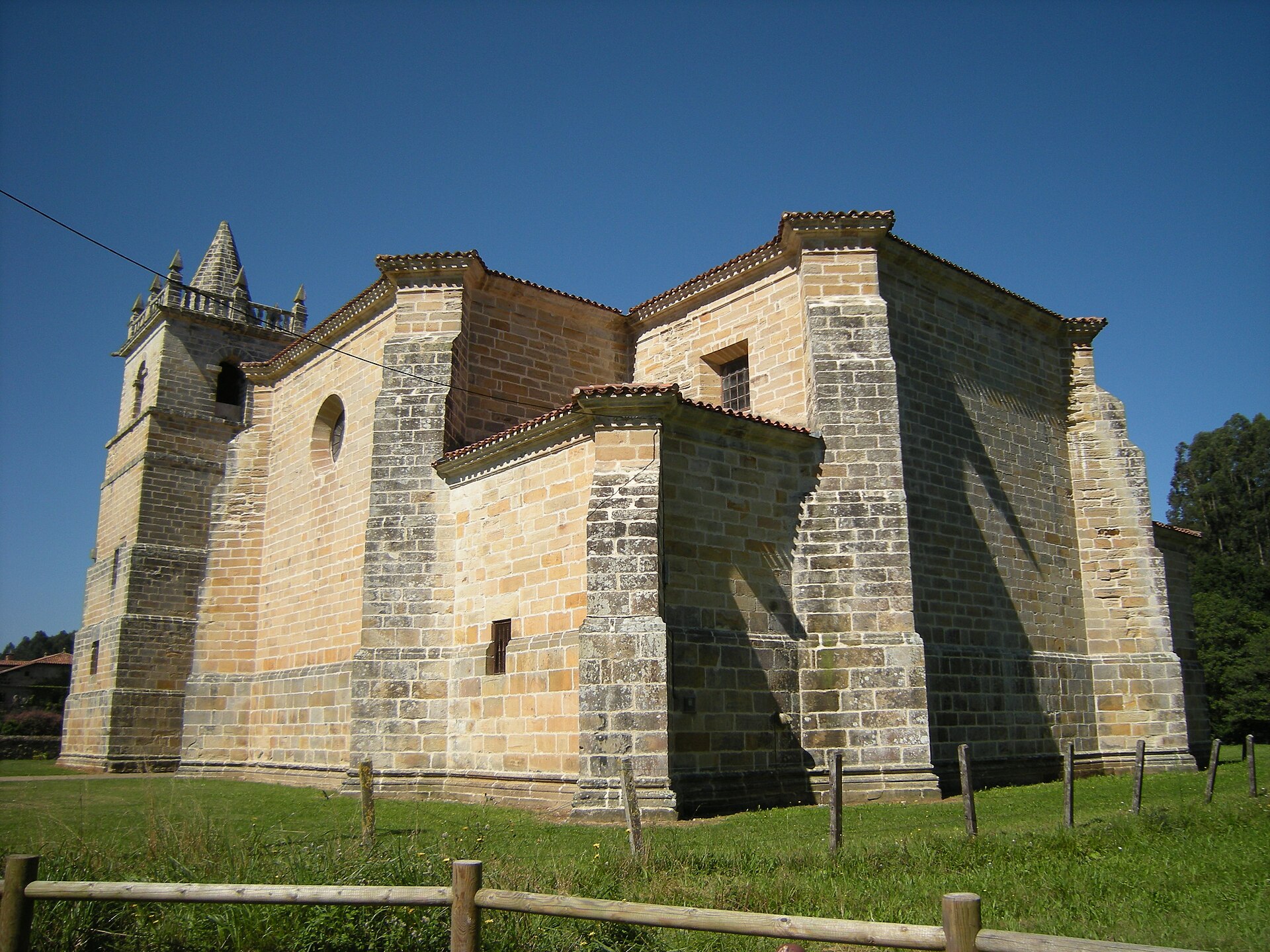
The building is made of ashlar masonry and has a Latin-cross plan with a single nave. Its exterior combines two square towers and monumental portals: the former municipal tourism portal describes the main façade as facing south and a second entrance to the east, while the current institutional listing places the tower façade to the west. As these sources disagree on orientation, this guide describes the architectural features without assigning a compass direction until the heritage record can be checked.
Inside, the nave and apse are covered by rib vaults, while a dome on pendentives rises above the crossing. The Town Council highlights three late-eighteenth-century Rococo altarpieces and a portrait of the founder. The combination of a structure rooted in the Baroque tradition and its reference to Lima explains why it is described as an example of colonial Baroque in Cantabria.
The American inspiration does not make the church an exact copy. It was built in Cigüenza with regional materials and the work of local stonemasons, following a model the patron wanted to evoke. Its size, twin towers and ashlar façade make it stand out among the village houses and easy to recognise in the immediate surroundings.
Protection and context
The Government of Cantabria declared the church an Asset of Cultural Interest, with Monument status, by Decree 35/1992, published in Spain’s Official State Gazette in 1993. The protection applies to the building known as the Church of San Martín in Cigüenza, within the municipality of Alfoz de Lloredo.
The church belongs to the history of Cigüenza and to the family networks that connected the valley with the Americas. The older text on this page mentions the chapter of Santillana del Mar’s involvement in processing the project; the historical study in the journal Altamira also records the role of Francisco, a priest in Toñanes, and Juan Antonio’s career in Lima. These connections help explain how a family initiative across the Atlantic left a large-scale work in a rural village.
The BIC designation places the church among Cantabria’s protected heritage. For visitors, that protection is an invitation to look closely at the architecture and respect both the building and its religious use. From outside, you can appreciate the scale of the project, the dressed stone and the relationship between the towers and the portal; the altarpieces, dome and vaults are inside and should only be viewed when the church is open and entry is permitted.
How to visit
San Martín is in Cigüenza, very close to Novales. You can include it in a walk through the village and view the twin towers, portal and ashlar work from outside. The church is a religious heritage site, and it should not be assumed to be open to visitors: contact the parish or Town Council if you need to confirm interior access or opening times.
Cigüenza is also home to the Hermitage of San Pantaleón and several historic houses linked to the Tagle, Allende and Gómez de Carandia families. Return to the Alfoz de Lloredo guide to explore its seven localities and their individual guides.
Frequently asked questions
Where is the Church of San Martín de Tours?
It is in Cigüenza, a locality in the municipality of Alfoz de Lloredo, near Novales, the municipal capital.
Why is it associated with Lima?
Juan Antonio de Tagle Bracho, born in Cigüenza and later emigrated to Peru, promoted the church and, according to municipal information, modelled its design on the Capuchin church in Lima.
Which features stand out?
The west façade with its two square towers, the portal framed by a large arch, the Latin-cross plan and the three Rococo altarpieces, which the Town Council dates to the late eighteenth century.
Can you visit the interior?
No regular visiting schedule has been confirmed. Before planning to go inside, check with the parish or Town Council and follow any access instructions.
Sources: Check source ↗, Check source ↗, Check source ↗ and Check source ↗.
What else to see in Cigüenza
This page is part of the Cigüenza guide. It includes the other places, routes and celebrations associated with this locality.
- Casona de Allende ES
- Hermitage of San Pantaleón ES
- House of the Countess of Tagle in Cigüenza ES
- House of the Counts of Trasierra in Cigüenza ES
Return to Cigüenza ES or to the whole municipality of Alfoz de Lloredo.
Source: Check source ↗.