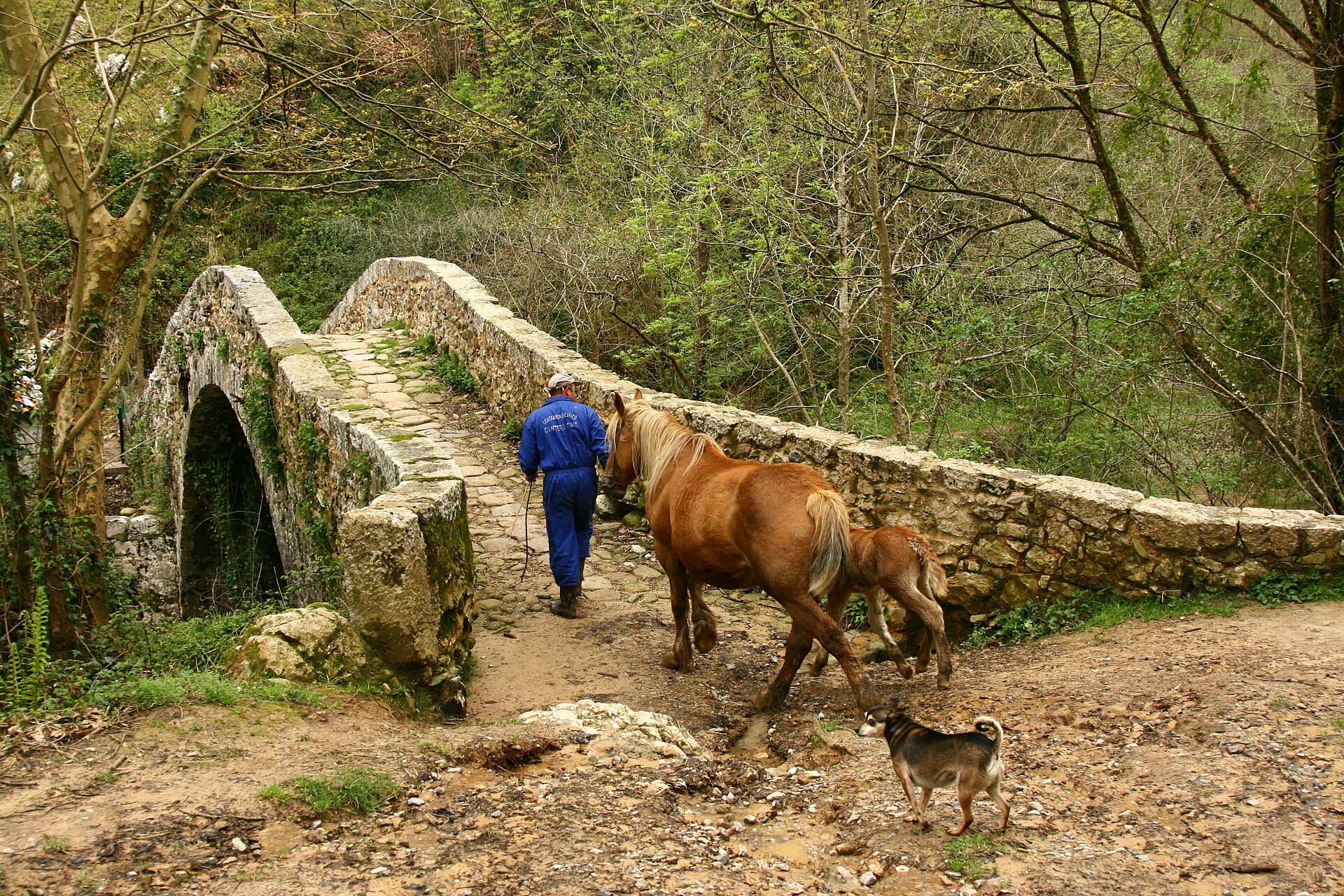
A single-arch Baroque bridge, despite its popular nickname.
Key facts
| Location | Mirones |
|---|---|
| Municipality | Miera |
| Type | Industrial and civil heritage |
| Access | View from public ways; take care by the river |
History and details
The bridge popularly called Roman
Mirones Bridge is often called the “Roman Bridge”, but the popular name does not match its chronology. The heritage information of Miera Town Council and Miera te espera identifies it as a Baroque work from the mid-18th century. Its construction was connected with the Royal Artillery Factory at La Cavada and the sourcing and transport of timber to fuel its furnaces. The bridge belongs to the modern industrial landscape of the valley, not to a documented Roman road.
The structure combines rubble stone and rounded river cobbles, with limestone ashlar in the arch voussoirs and buttresses. A single semicircular arch crosses the river, built from regularly cut stones. This functional yet carefully built crossing formed part of a network of routes linking settlements with woodland and timber transport points.
The river as infrastructure
The bridge makes more sense alongside other remains in Mirones: stone-paved paths, weirs, channels and the crossings at La Vega and La Hoz. La Cavada’s factory needed forest resources and a way to move them through a steep valley. Roads carried people and materials over land; the river and waterworks were also part of that economy. The present riverside path follows part of this system and connects the bridge to the river landscape and village.
A study by the University of Cantabria compares this crossing with other historic bridges in Miera and describes their locations and construction. The municipal guide explains the link with timber and the factory. Together, these sources distinguish the oral memory preserved in the nickname from the documented history of the structure.
Visiting and conservation
The bridge is part of the Mirones setting and can be viewed from public roads and paths. The river requires caution: stone surfaces may be slippery, and water levels can rise after rain. Do not lean over unsafe edges, descend to the river during high water or climb onto the bridge walls for photographs. It is a historic crossing in a landscape, not a purpose-built viewpoint.
The riverside path is described as a short, waymarked route, but in 2026 the town council announced a grant to restore and promote it. That announcement does not confirm that works are complete or that the route is open now; check local notices. Do not park or walk where you obstruct residents, and respect riverbanks and private property.
Why stop here
The bridge shows how an everyday crossing became part of Cantabria’s industrial history. It does not need a Roman attribution to be significant: its Baroque date and connection with the Royal Artillery Factory explain its role more accurately. Alongside San Román Church, the Marqués de Valdecilla School and the riverside walk, it forms part of a compact cultural visit to Mirones. Look closely and it also becomes clear that the Miera was more than a natural boundary: it supported paths, mills and energy uses.
Explore Mirones
This page belongs to the guide to Mirones and the complete guide to Miera.
Marqués de Valdecilla School · San Román Church · Old La Hoz Bridge · Historic La Hoz Mill · Mirones · Miera
Sources
Miera tourism information ↗ · University of Cantabria study of Miera bridges ↗