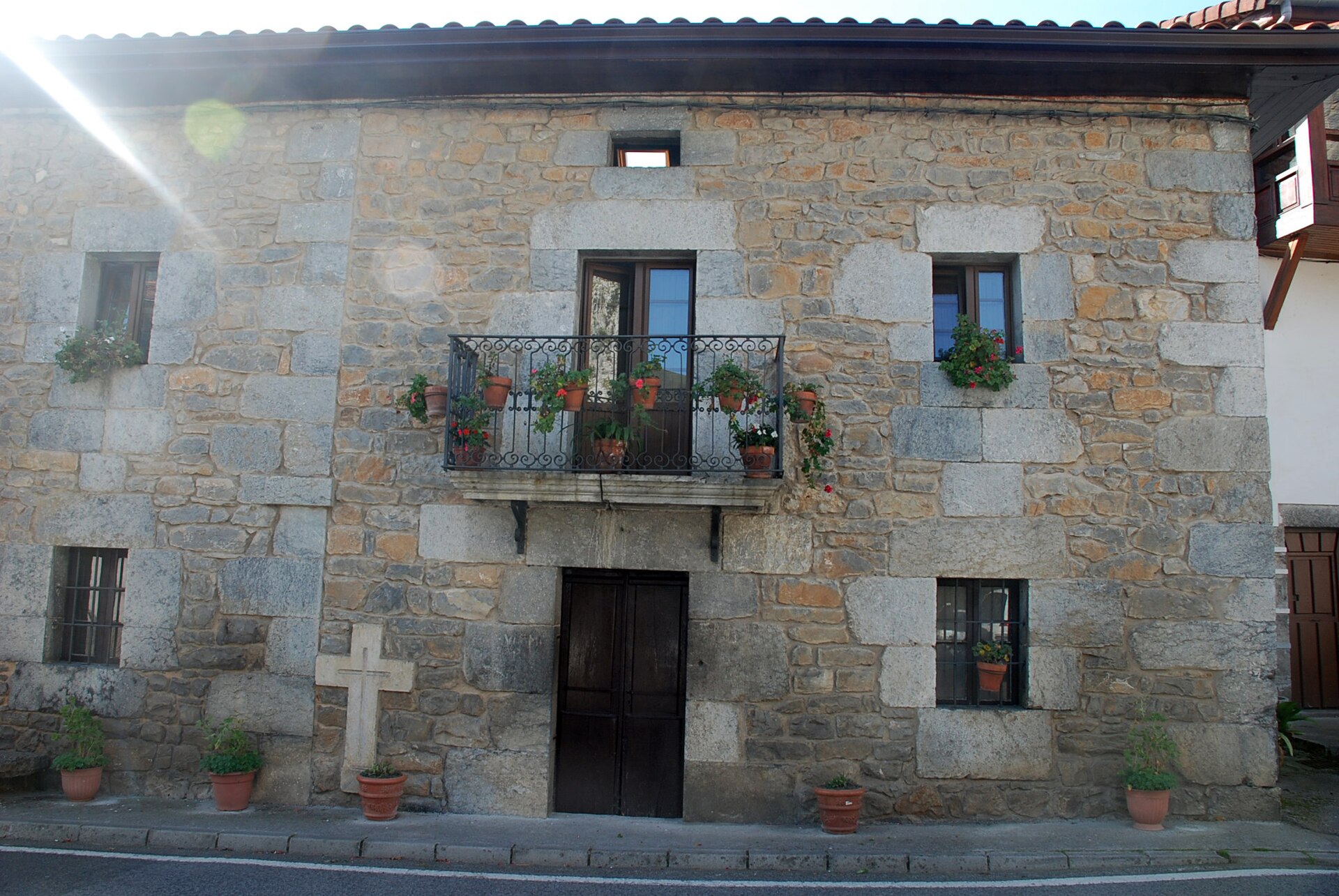
The parish church was built in the 17th century and altered in later periods.
Key facts
| Location | Mirones |
|---|---|
| Municipality | Miera |
| Type | Religious heritage |
| Access | Exterior; ask locally about interior access |
History and details
The parish church of Mirones
San Román is one of the principal landmarks in the settlement of Mirones. Municipal tourism sources describe a 17th-century building with rubble-stone walls and ashlar blocks at the corners and around the openings. The plan consists of a single nave, a square-ended chancel, a choir at the west end and a tower. This is local-scale architecture connected with the religious life of a community that grew beside the Miera River and the historic route towards San Roque de Riomiera.
The choir dates from the 18th century. The three-storey bell tower, divided by string courses, was built around 1905. These different dates show the church as a building shaped by successive interventions, rather than one completed in a single campaign. Inside is a Churrigueresque altarpiece assembled between 1704 and 1714 by master Juan del Acebo, linking the parish with the artistic activity of the period.
A church within the landscape of Mirones
San Román stands beside the municipal Tourism Office in Mirones, on the CA-260 road between Liérganes and San Roque de Riomiera. The nearby office can provide information about the valley, but it should not be assumed to open whenever the church does, or vice versa. Access to the church depends on parish use; the sources consulted do not guarantee daily interior visits or regular visitor hours. Confirm access before travelling specifically to see the altarpiece.
Nearby is the Rebollar wayside shrine, and the riverside heritage route begins here, with paths, bridges and the riverside walk between La Vega and the bridge popularly called Roman. That bridge is not Roman: it is a Baroque work from the 18th century. Treat the riverside walk as a separate activity and check conditions after heavy rain or notices of works.
What to look for
From outside, notice how the nave and tower relate to the surrounding houses, and the contrast between rubble stone and ashlar at corners and openings. If the interior is open, the altarpiece and choir are the historic elements identified by local sources. The tower is dated only approximately, as in the tourism information, and no assumption is made that movable artworks are always on display.
This is an active church. Respect services and the community’s work: do not photograph the interior during worship or block the entrance and churchyard. The municipal tourism record is the principal source for the architectural description; the Tourism Office is the best contact for current access, opening times and any cultural activities.
Explore Mirones
This page belongs to the guide to Mirones and the complete guide to Miera.
Marqués de Valdecilla School · Mirones Bridge, popularly called Roman · Old La Hoz Bridge · Historic La Hoz Mill · Mirones · Miera