The Corro Family Palace, San Vicente Town Hall
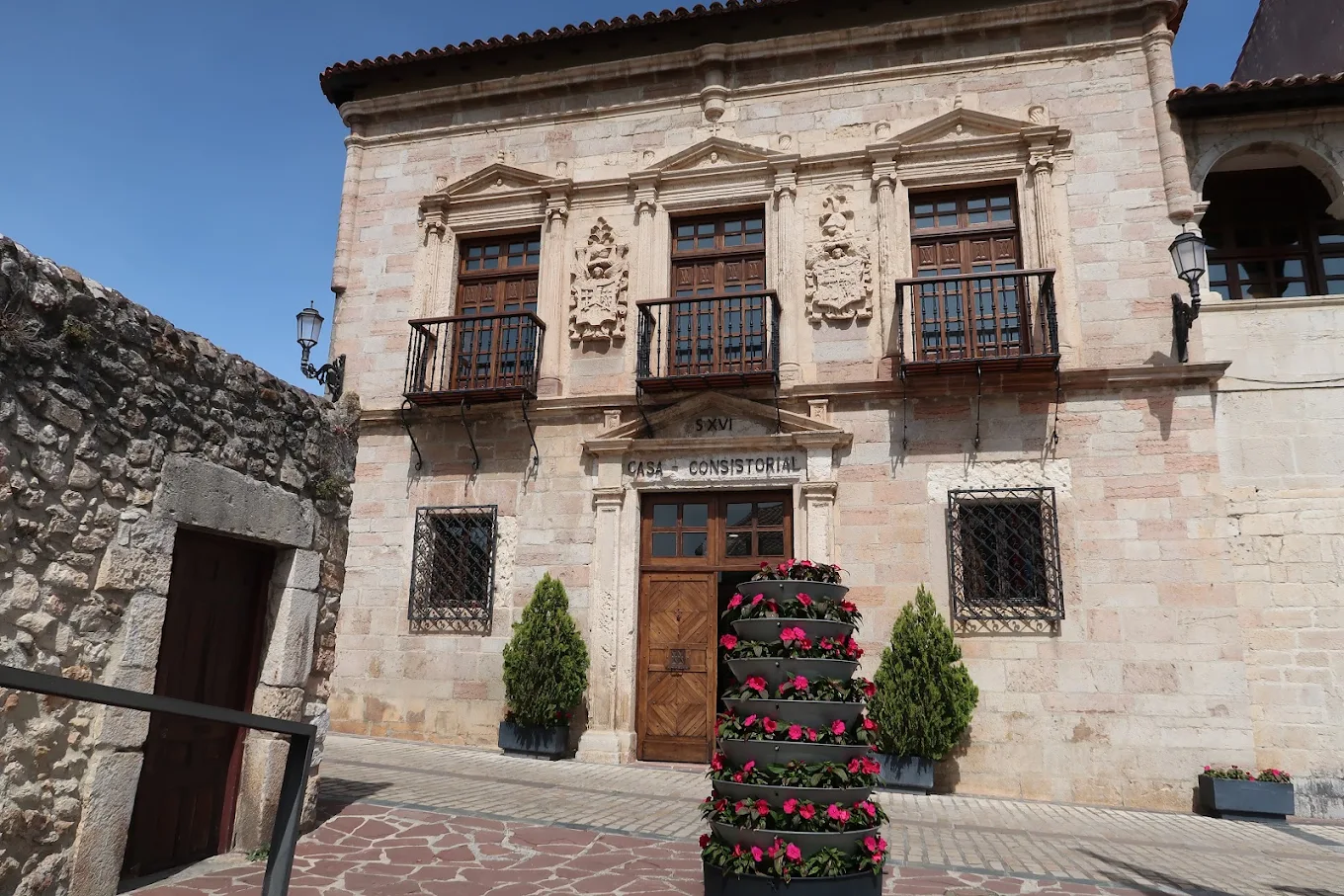
The Corro Family Palace, now San Vicente de la Barquera’s town hall, has a history linking Renaissance architecture with social care. The town council says Antonio del Corro commissioned it in the 16th century to receive poor people who were ill. The University of Cantabria records his wish, stated in his 1553 will, to establish a hospital for the poor in San Vicente. The former hospital house is now the municipal headquarters and one of the best-known buildings in the Puebla Vieja.
Essential information
| Location | Puebla Vieja, San Vicente de la Barquera |
|---|---|
| Current use | Town hall |
| Commissioned by | Antonio del Corro |
| Date | 16th century, according to municipal tourism information |
| Interior visit | The building houses municipal offices; no regular tourist visiting hours are published |
From hospital house to town hall
The story begins with an act of social care. The town council’s monuments page says Antonio del Corro commissioned the building in the 16th century to receive poor people who were ill. The University of Cantabria provides a precise documentary detail: in his will, drawn up in Seville on 1 August 1553, Corro expressed his wish to found a hospital for the poor in San Vicente and a family chapel in Santa María de los Ángeles church.
The university study calls the building the “Hospital House of Mercy” and identifies it as the present town hall. This explains why two names are used: Corro Family Palace or Corro Palace for the building as it stands today, and Hospital of Mercy when referring to its original purpose. It was not simply a residential palace. Its current name reflects its connection with the family and its architectural form; its hospital history explains why it was built.
The plan to establish a hospital for poor people who were ill should be distinguished from San Vicente’s other historic establishments. A short walk away are the ruins of the former Hospital of the Conception, another place of welcome for walkers on the coastal route. These are separate buildings: Corro Palace became the town hall, while the remains of the Conception hospital stand beside the church and are listed separately in the municipal catalogue. Keeping them distinct avoids confusing their functions, dates and present condition.
The palace still has a public, everyday role as the town hall. That does not mean its interior is open as a museum. The municipal tourism information does not publish interior visiting hours, so view it from the street and contact the Tourism Office if you want to check for a special opening.
Antonio del Corro and his legacy in town
Antonio del Corro was a prominent member of a family connected with San Vicente de la Barquera and with the religious and civic life of the 16th century. The University of Cantabria lists him among the patrons of Renaissance works in the town: the hospital for the poor and the family funerary chapel in Santa María de los Ángeles church. His tomb survives inside the church, linking the civic building with another trace of the same family initiative.
The connection between the palace and the church is more than geographical. The will cited by the university records two different projects: a charitable institution and a burial place for the family. Visitors can explore both sites without claiming that the hospital and chapel formed a single architectural complex. The former hospital house is now the town hall; the chapel and tomb are inside the church.
The Corro family’s history also forms part of the urban landscape of the Puebla Vieja. The town hall retains the family name and sits in an area where civic, religious and defensive buildings stand close together. This should not be reduced to a label such as a “trinity of power”: each building had its own function and chronology. The value of the walk lies in seeing several kinds of urban life in a compact area.
A Renaissance façade
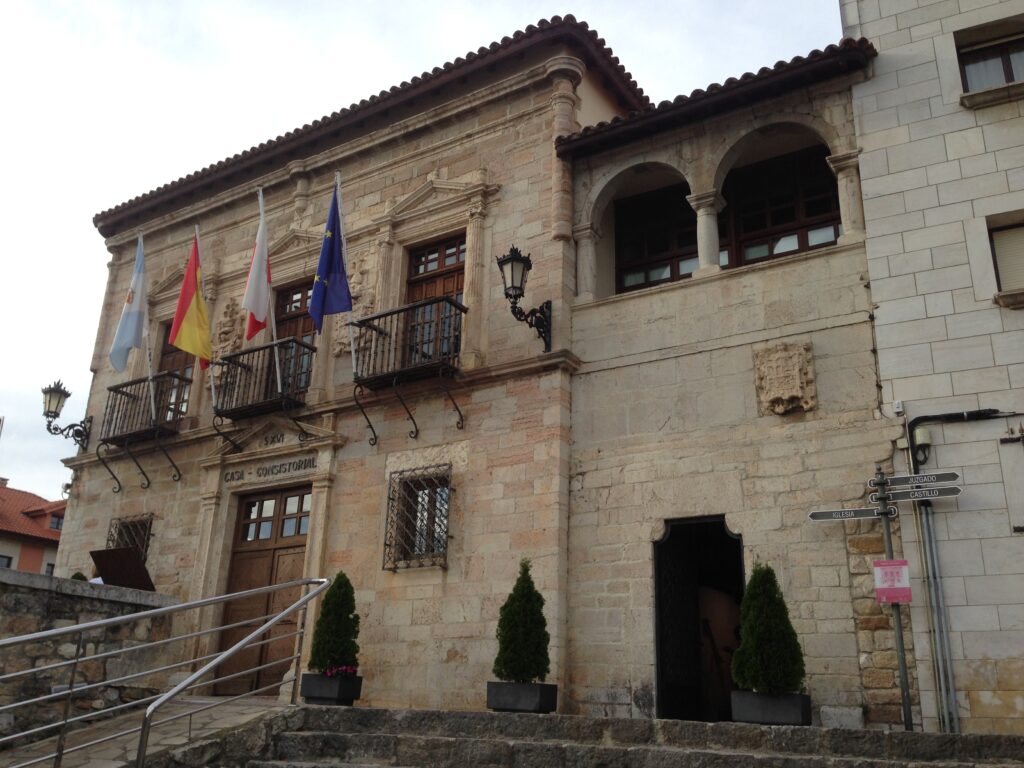
The municipal tourism portal describes the palace as a Renaissance building with a classicising style and Plateresque decoration. Two coats of arms associated with its founder stand out on the façade. They offer a visible reminder of family identity: beside the municipal offices, the heraldry recalls the person who commissioned the hospital and linked his name to San Vicente’s history.
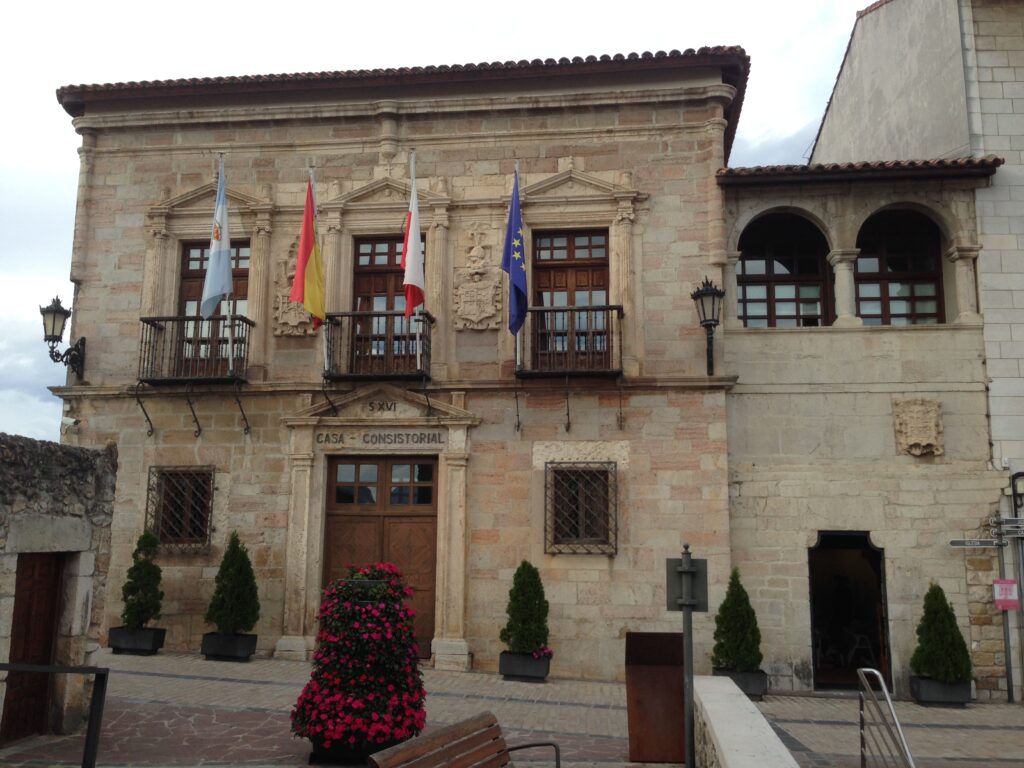
The façade combines an orderly composition with details intended to convey status. From the street, visitors can see the lintelled doorway, balconies and coats of arms. Its stonework and openings give it a different character from the walls and castle, though all belong to the historic centre. Describe what is visible without assigning a precise date to every moulding or addition: the tourism sources consulted do not publish a detailed chronology of alterations to the town hall.
The building also connects to an adjoining structure through arcades visible in the ensemble. This is part of how the space reads today, but it is not enough to reconstruct the layout of the original hospital rooms. No complete historic plan or room inventory was located in the sources consulted. The visit therefore focuses on the façade, its current use and the documented history of its founder.
Corro Palace appears in San Vicente’s General Urban Development Plan catalogue of protected assets. The catalogue lists it separately from the wall, the Hospital of the Conception, the church and the King’s Castle. This urban-planning listing provides a municipal conservation framework; it should not on its own be described as an individual declaration of Bien de Interés Cultural (Asset of Cultural Interest).
The building in the Puebla Vieja
The town hall’s location makes it easy to plan a walking visit through the old centre. The Puebla Vieja occupies the upper part of town, with streets, gates and stretches of wall beside the main historic buildings. The municipal “San Vicente in One Day” route goes up Calle Alta, passes the former Hospital of the Conception and reaches Santa María de los Ángeles church. The palace fits into this walk and can be viewed while linking the church, Preboste Tower and King’s Castle.
From the façade, notice how the building relates to the street and to the paths leading to nearby monuments. At the church, look for Antonio del Corro’s chapel and tomb to complete the family story. You do not need to enter municipal offices or interrupt the town hall’s work to understand the building’s history.
The historic centre has slopes and narrow streets. Allow time to walk slowly, especially if you plan to continue to Campo de Santa María or descend towards the harbour. The paving may be damp or uneven; wear suitable shoes and respect signs, official departments and working areas. For current accessibility or visiting information, contact the Tourism Office before you go.
What to look for during your stop
Start by identifying the two coats of arms on the façade, which the municipal tourism page associates with the founder. Then look at the doorway, balconies and arrangement of the openings. No prior knowledge of architecture is needed: compare the palace’s orderly restraint with the defensive scale of the wall and castle and with the religious role of the nearby church.
Also consider the change in use. A hospital house created to care for poor people who were ill is now the town hall, yet its name and appearance retain traces of family patronage and 16th-century architecture. Its use as municipal headquarters keeps the building connected to public life while limiting the chance to visit it like a monument with rooms open to the public.
What else to see nearby
On the same walk, visit Santa María de los Ángeles church, where Antonio del Corro’s tomb is located; the Preboste Tower; the King’s Castle; and the former Hospital of the Conception. See our guide to the municipality to continue towards the harbour and the villages.
Frequently asked questions
What is Corro Palace used for today?
It is San Vicente de la Barquera’s town hall and municipal headquarters.
Was it a hospital?
Yes. The municipal tourism portal and the University of Cantabria describe it as a hospital house intended for poor people who were ill. The university study calls it the Hospital House of Mercy.
Is it the same building as the Hospital of the Conception?
No. Corro Palace is the town hall. The ruins of the Hospital of the Conception stand beside the church and belong to a different historic building.
Can visitors go inside?
The interior houses municipal offices. The tourism sources consulted do not publish regular visiting hours; ask the Tourism Office whether a special opening is available.
What stands out on the façade?
The municipal description highlights its Renaissance style, Plateresque decoration and two coats of arms associated with Antonio del Corro.
Sources: Municipal monuments portal, University of Cantabria heritage study (PDF), Protected heritage catalogue (PDF) and Official one-day route