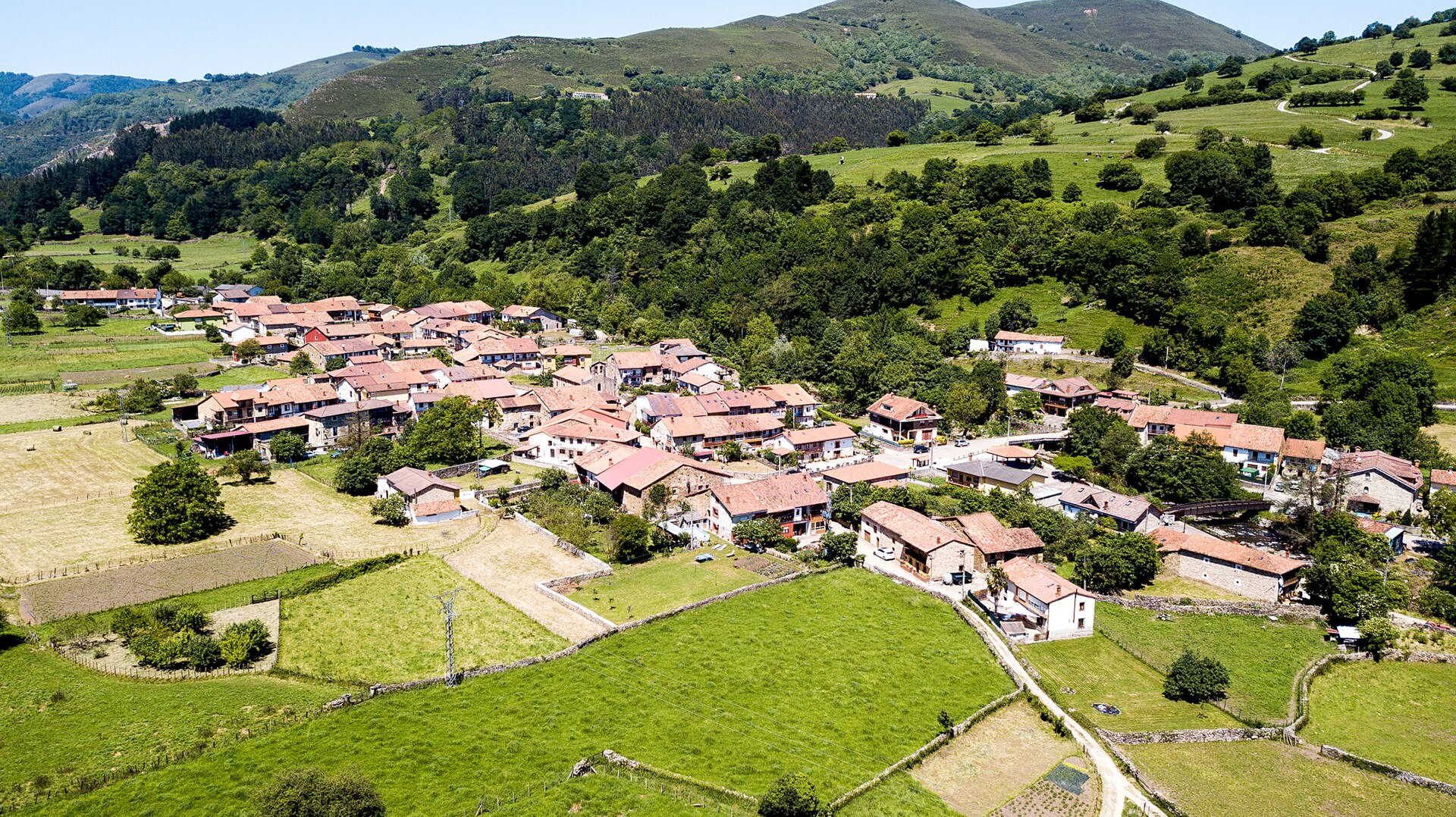
San Sebastián is the parish church of Villasuso. The Town Council dates its construction to the end of the Spanish Civil War.
Key facts
| Locality | Villasuso |
|---|---|
| Municipality | Cieza |
| Type | Heritage |
| Access | Exterior; ask about interior visits |
History and details
The municipal page describes a rectangular plan divided into four bays, with a porch on the main façade. The old Viajar por Cantabria page adds that the church was built towards the end of the Civil War and describes a two-opening bell gable with bells, topped by a cross, and pinnacles on the side walls of the façade. This is retained as a description from the older page, not as an independently verified technical inventory.
The building represents a more recent period than the seventeenth- and eighteenth-century manor houses found in the valley. This range of dates shows that Cieza’s heritage is not limited to medieval or Baroque architecture: it also includes twentieth-century churches that shape local life.
The church is a place of worship. No permanent tourist opening hours have been confirmed. View it from public roads without blocking the entrance, and do not photograph the interior during a service without permission.
Plan your visit
Religious use; check service times and celebrations.
Access
Seeing a building from the outside does not mean that it is open to the public. Check its current use and respect private property.
The parish church of Villasuso
The Church of San Sebastián is a prominent landmark in Villasuso and part of the municipality’s religious heritage. The Town Council says it was built towards the end of the Spanish Civil War. This date distinguishes it from San Juan Bautista in Collado and San Tirso in Villayuso, churches whose architectural histories are associated with earlier periods. Their different timelines show that the three villages do not share a uniform heritage, but preserve buildings connected with different moments in the valley’s life.
Rectangular volume and porch
The municipal page describes a rectangular plan divided into four bays and a porch on the main façade. The porch creates a transition between the street and the worship space and shelters the entrance from the weather. The old Viajar por Cantabria page describes a well-built ashlar façade and a window above the porch. It also mentions a two-opening bell gable, two bells, a Latin cross finial and pinnacles at the sides. These details are retained as information from the historic page and have not been independently verified through an architectural survey.
A twentieth-century church among older houses
San Sebastián stands beside the Casa de Fernández de Cieza, a nearby house that the Town Council believes may date from the eighteenth century. The contrast between a historic home and a church from the end of the Civil War helps show how local heritage developed over time. Do not assign earlier centuries to the church or mix its features with those of other buildings in the valley. Each has a different history and purpose.
The feast and dedication
The municipal calendar lists the feast of San Sebastián in Villasuso on January 20. This date connects the church’s dedication with the local cycle of celebrations, but does not guarantee the same events, times or format every year. Processions, Masses and other activities depend on the annual programme. Ask the Town Council or parish before attending; do not rely on an old programme to plan a current visit.
Exterior visit and possible interior access
The church is used for worship and has no confirmed regular visitor hours. You can view its façade from public roads, taking care not to block the porch or entrances. Interior access depends on parish opening and services. Do not enter the sacristy, climb the bell gable, or touch bells, images or furnishings. If a service is taking place, respect the religious character of the space and follow the local community’s instructions.
Villasuso as a starting point
The village is also the starting point for the PR-S.45 Brañazarza route, a long-distance mountain walk. This is separate from visiting the church and requires several hours, suitable preparation, and a check of the weather and trail markings. You could begin with a short walk through the village and then decide whether conditions are suitable for hiking. The municipal page gives 17.5 kilometres and around five and a half hours for the full circuit; treat these figures as a guide, not a guaranteed duration.
What still needs confirmation
The official sources consulted provide a brief description and approximate date, but do not confirm the architect, an opening calendar, interior accessibility or guided visits. The old page adds visual details, which should be read as historic website information rather than an up-to-date inventory. If the parish or Town Council publishes further documentation, the church’s history can be made more precise. Until then, an exterior visit and respect for its religious use are the appropriate approach.
The church and Villasuso’s landscape
The village lies in the Cieza River valley, among homes, meadows and paths leading towards the mountain headwaters. Visit the church as part of this inhabited settlement, not as an isolated attraction within a tourist site. Before stopping, find an authorised parking place and keep access to the church and homes clear. Nearby mountain routes still require planning: the Brañazarza walk may take much of the day. A short village walk and a long hike are different plans; choose according to the weather and your available time.
More to see in Villasuso
This page is part of the Villasuso guide, where you can find the other places, routes and celebrations assigned to this settlement.
Back to Villasuso or to the whole municipality of Cieza.
Sources: Check source ↗ and Check source ↗.