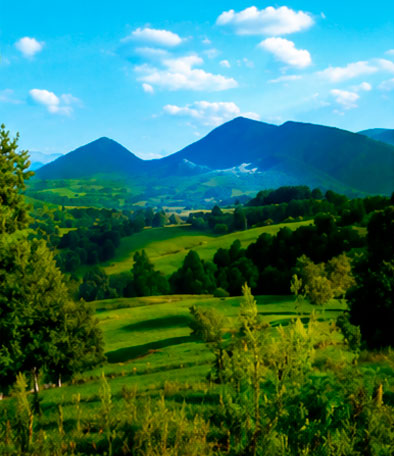
Molledo: seven villages in the Iguña valley
The municipality of Molledo is made up of seven principal localities: Cobejo, Helguera, Molledo, San Martín de Quevedo, Santa Cruz de Iguña, Santa Olalla and Silió. Molledo is also the name of the municipal capital. Keeping the distinction clear avoids confusing the village with the whole municipality. Neighbourhoods such as Casares, Pando, Quevedo, Santián, Uldá, Media Concha, Arca, Caceo, Murá and Santa Marina belong within their respective localities; they are not additional villages.
The Iguña valley forms part of the Besaya corridor, a natural route between the coast and the Meseta plateau. The river, railway and roads have shaped travel and economic life here. Silió’s Romanesque church, Santa María in San Martín de Quevedo, manor houses and the remains of Cobejo Castle represent different periods, but they do not all have the same legal protection: some are designated Assets of Cultural Interest (BIC), others appear in inventories or catalogues, and many homes remain privately owned. The town council also lists the Casa del Conde de Bassoco, designed by Ralph Selden Wornum in 1906, and the birthplace of poet Evaristo Silió among its civil heritage. It does not specify their exact locality or announce visits, so they are mentioned at municipal level rather than assigned to a village itinerary.
The literary route based on El Camino links Molledo with Miguel Delibes’s childhood. The town council maintains a signed trail with audio guides and eight stops; check availability, as a booking may be required. The Vijanera of Silió, designated an Intangible Asset of Cultural Interest, is a living tradition whose date and programme are confirmed each year. The Santiago and La Maya festivities and celebrations of the Virgen del Camino also vary from year to year.
The town council and its tourist map show routes including Monte Canales, the Besaya Roman road, Las Turberas, Los Navajos and the Delibes trail. A line on a map does not guarantee continuous waymarking or current conditions. Check the forecast, closures, surface and any private sections. Ruins and archaeological sites are not open to the public simply because they appear in a guide. In Molledo, the town council also lists the Romanesque hermitage of San Lorenzo, moved from Pujayo to the Portalón neighbourhood and consecrated in 1132. No visiting hours are published, so confirm access before going.
This guide links each attraction to the village where it is located. It avoids outdated population figures, undated opening times and distances unsupported by a verifiable source. For rail services, check ADIF or Renfe information for Santa Cruz de Iguña station; contact museum and guided-tour organisers before travelling.
- Villages in the municipality of Molledo ES
- What to see in Molledo
- Things to do in Molledo
- Festivals and traditions in Molledo ES
- Plan your visit to Molledo ES
- Where to eat in Molledo ES
- Where to stay in Molledo ES
Sources: Molledo Town Council tourism ↗, Municipal tourist map, 2025 ↗, Religious heritage ↗, Civil heritage ↗, Routes and walks ↗, Festivals of interest ↗, Miguel Delibes literary route ↗, Municipal services ↗, Official State Gazette, BIC decree ↗, Official State Gazette, heritage protection ↗, Official State Gazette, heritage protection ↗, Cantabria Official Gazette ↗, Cantabria Official Gazette ↗ and ADIF: Santa Cruz de Iguña station ↗.