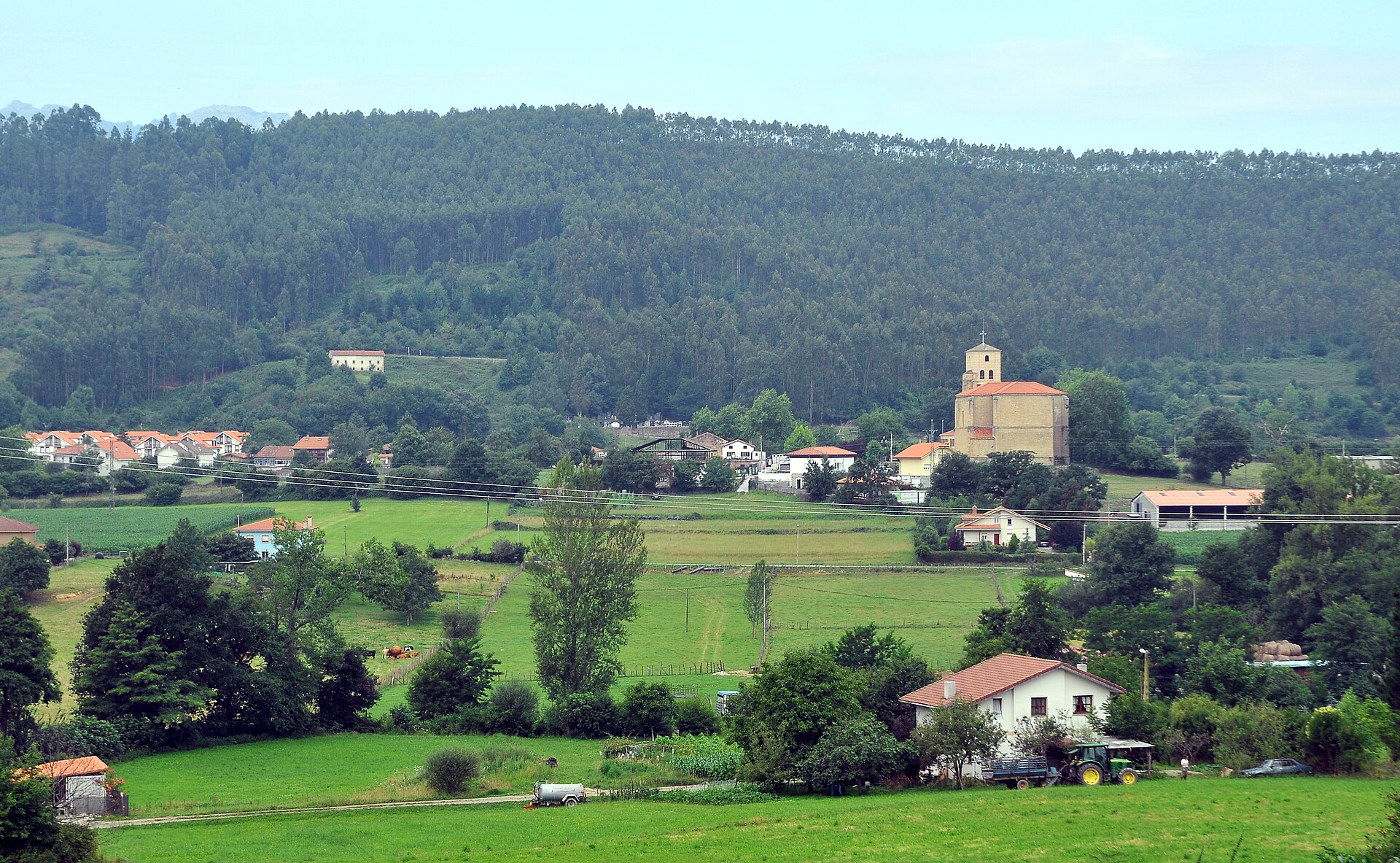
The Church of Saint Andrew is the most monumental religious building in Rasines. Construction took place between the late sixteenth and seventeenth centuries. It has a Latin-cross plan, ribbed vaults and a noteworthy Baroque altarpiece. The tower collapsed in 1980, and the church returned to worship in 2015.
Essential information
| Place | Rasines |
|---|---|
| Municipality | Rasines |
| Type | Heritage |
| Access | Exterior; check whether the interior is open |
History and details
The town council links construction with a testamentary provision by Rodrigo Gil de Hontañón, whose father, Juan Gil de Hontañón, was born in Rasines. This attribution should be read with caution: the work unfolded over several stages, and it does not mean that the architect personally carried out every part.
The tower collapsed in November 1980, damaging part of the nave and destroying the nineteenth-century organ. Restoration made it possible to recover the building and the altarpiece; the church reopened for worship in 2015 after decades of closure.
Planning your visit
Interior access depends on parish use. Check service and visiting times before you go.
Access
Being able to view the exterior does not mean the building or grounds are open to the public. Check their current use and respect private property.
The church and its neighbourhood
In the villages of Rasines, a church or chapel often occupies a central place in the settlement and community calendar. Its architecture is best understood alongside nearby houses, roads and fields. A monumental description does not mean that the site is set aside for tourism: it retains religious and community uses.
Materials and forms
Local stone appears in walls, corners and window surrounds. Ashlar is sometimes reserved for portals or structural features, while rubble masonry covers larger surfaces. Alterations, extensions and restoration may combine materials from different periods; visual inspection alone cannot date every part.
A cautious chronology
Municipal sources give approximate periods and sometimes differ on dates. When a building is assigned to a century or a master stonemason, this guide retains that level of precision and does not turn a possibility into certainty. Rigorous attribution of authorship and construction phases requires architectural studies or specific archival documents.
Objects and altarpieces
Sculptures, paintings and altarpieces are inside churches that may be closed. Their mention in a description does not confirm that they can be seen at any time. If a service is taking place, remain quiet and do not use flash or interrupt worshippers. Photography rules may vary by parish and conservation needs.
Viewing from public space
Stay on public streets and paths and keep access to homes clear. Do not cross a gate simply because a monument is visible beyond it, and do not park on fields or in entrances. If a building stands beside private land, continue only where signs and the owner allow. Residents’ privacy comes first.
A heritage spread across the municipality
The municipality comprises fourteen localities, and many heritage sites are separated by local roads. It is not a compact group that can be explored without planning. Organise the day by neighbourhood and use official paths. Between chapels there may be slopes, traffic or stretches without pavements.
Conservation and works
Restoration can change a building’s appearance, use and availability. These pages rely on documented information but do not guarantee that a building is open or that its exterior is not fenced off. Respect maintenance barriers and do not climb architectural features. The stability of ruins is not always apparent.
Respect local life
A Mass, patronal festival or funeral changes how the surroundings are used; these are not tourist events. Ask before entering and follow the community’s instructions. Visitors can observe the exterior and learn about its history without demanding interior access. If a door is open, first check whether public entry is indicated.
Rasines and this church
The feature that most distinguishes the church is the sequence of damage, restoration and reopening for worship. The municipal guide records the tower’s collapse in 1980 and the return of liturgical activity in 2015; this reopening should not be confused with regular tourist hours.
Plan and interior space
The Latin-cross plan organises the nave and transept, while a rectangular apse closes the liturgical axis. The broad central nave is divided into bays, and the ribbed vaults with tiercerons preserve a Gothic tradition in a building whose construction extended across centuries.
Altarpiece and movable heritage
The municipal source highlights the polychrome high altarpiece as one of the interior’s main features. The nineteenth-century organ, destroyed when the tower fell, also forms part of the building’s history. The available documentation does not provide a complete inventory of current movable heritage or confirm that every item can be seen on an ordinary visit.
The fallen tower
In November 1980 the tower and part of the nave collapsed, and the nineteenth-century organ was lost. The event changed the church’s profile and made restoration necessary. It explains why older and more recent photographs may show different volumes; the collapse should not be mistaken for the building’s present condition as a ruin.
An attribution that needs qualification
Rodrigo Gil de Hontañón’s testament is associated with the construction of the church, and the town council says that the architect may have ordered it to be built. This is a documented connection, not proof that he personally directed every element. His father, Juan Gil de Hontañón, was born in Rasines and is part of the local history of stonemasons.
Worship and visiting
The church returned to worship in 2015 after decades of closure. An older municipal source gives Sunday Mass at midday, but that schedule may have changed. The date of an institutional webpage is no substitute for recent confirmation from the parish. The exterior can be viewed from the neighbourhood centre without disturbing services.
The centre of the neighbourhood
La Gerra, Campo de San Andrés, La Riva, El Molinar and La Mies are arranged around the municipal capital. The church should be understood within this settlement and the Camino Real. When walking, keep access to the clinic, library, school and other essential services clear.
Documenting the building
Municipal inventories describe Late Gothic and Renaissance styles, although a building altered over time cannot be explained by one label alone. The stonework, vaults, tower and altarpiece belong to different layers. A detailed technical study requires a heritage inventory or restoration report; this guide offers a general reading for visitors.
A church beside the Camino Real
Saint Andrew’s stands in the central settlement, in a territory historically crossed by roads connecting valley neighbourhoods. Its scale and position help explain Rasines’s role as a meeting point and religious landmark, though current services should be checked separately. The church is not a museum: it remains a place of worship, and visits depend on the parish. Sunday hours shown on municipal pages may change, so confirm them before travelling.
Building history and restoration
Construction is dated from the late sixteenth to the early seventeenth century. The municipal historical tradition connects the project with Rodrigo Gil de Hontañón’s circle; this should be understood as a documentary reference, not proof that the master personally directed every stage. The tower collapsed in November 1980, damaging parts of the nave and the nineteenth-century organ. Later work restored the church, which returned to worship in 2015. This recent history helps explain differences between its present appearance and older descriptions.
What to observe from outside
The stonework, the nave’s volumes and the tower can be appreciated from public areas. An exterior view is not enough to identify every construction phase, and interior features may not be visible. If the church is open during a service, give the community space, follow instructions and avoid flash, conversation and unauthorised photography. Do not touch altarpieces, images or funerary objects.
Saint Andrew’s within the municipality
Rasines’s heritage is spread across fourteen localities. Saint Andrew’s can be placed in context alongside San Martín de Cereceda, the Church of Saint Sebastian in Ojébar and the neighbourhood chapels, but there is no need to visit them all in one day. Local roads and paths may have no pavement; plan journeys and park without blocking entrances. This page retains the church’s historic URL and gathers useful information in the current format.
What else to see in Rasines
This page is part of the guide to Rasines. Find the other places, routes and celebrations assigned to this locality there.
Return to Rasines ES or explore the whole municipality of Rasines ES.
Sources: Municipal religious architecture ↗, Municipal monuments inventory ↗ and A walk through the neighbourhoods of Rasines ↗.