Ruiloba: a guide to its eight neighbourhoods, heritage and coast
Historical records refer to the area at different times. A local study records an 1011 reference to the former name Río de Loba and later donations to religious institutions. The 14th-century Becerro de las Behetrías lists the council of Rio Loba. These are written records of settlement and medieval organisation, not the founding dates of today’s municipality.
Ruiloba lies on Cantabria’s western coast, between Comillas and Alfoz de Lloredo. The Town Council recognises eight neighbourhoods: La Iglesia (the municipal capital), Liandres, Sierra, Trasierra, Casasola, Concha, Pando and Ruilobuca. Each neighbourhood page leads to its own attractions, distinguishing the municipality as a whole from each locality.
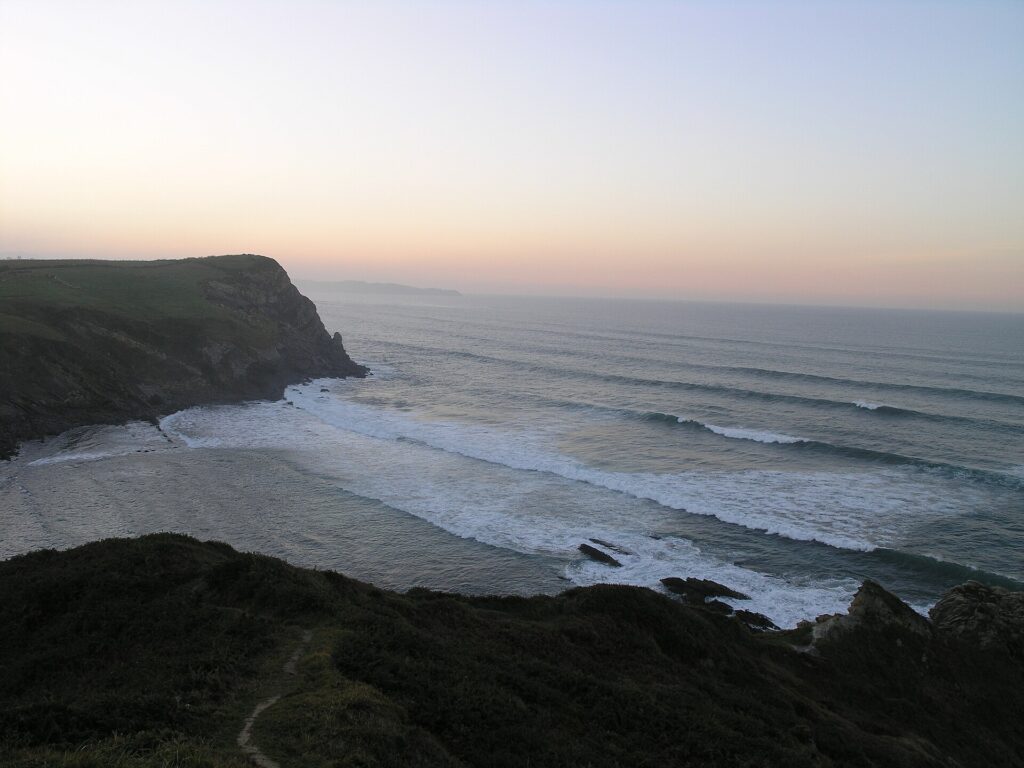
The shoreline consists mainly of coastal platforms and cliffs. The Town Council identifies the shared beaches of Luaña, with Alfoz de Lloredo, and Puente Portillo, with Comillas, and clarifies that Ruiloba has no beach of its own. Miradorio, Las Cornejas, Tusio and Fonfría refer to coastal viewpoints and stretches best seen from safe places; do not descend by unmarked access routes.
The neighbourhoods combine traditional architecture, historic houses, churches and chapels. The Danza de las Lanzas and Baile del Conde de Lara are listed as Intangible Cultural Heritage. El Mozucu is celebrated with Udías on 9 September. Ruiloba’s Town Council describes it as a festival of tourist interest; however, the order published in the Cantabria Official Gazette in 2023 differs over the municipality where it is celebrated. The dedicated page explains this documentary discrepancy.
Bodega Miradorio offers wine-tourism experiences that should be checked and booked directly with the operator. Public information does not establish open visitor access to caves, convents or religious buildings. Check access and programmes before travelling.
- The eight neighbourhoods of Ruiloba
- What to see in Ruiloba: neighbourhoods, architecture and coast
- Things to do in Ruiloba: scenery, wine and paths
- History and heritage of Ruiloba ES
- Festivals and traditions of Ruiloba ES
- Plan your visit to Ruiloba ES
Traditions across the municipality
Some cultural expressions and celebrations bring several neighbourhoods together or extend across the municipality. El Mozucu is shared with Udías; traditional dances form part of Ruiloba’s living heritage. Ruiloba’s Town Council describes El Mozucu as a festival of tourist interest, although the 2023 order in the Cantabria Official Gazette attributes the celebration to San Vicente de la Barquera. The page on the festival explains the documentary discrepancy.
- El Mozucu: a festival shared by Ruiloba and Udías ES
- Danza de las Lanzas and Baile del Conde de Lara ES
Sources: Consult source ↗, Consult source ↗, Consult source ↗, Consult source ↗ and Consult source ↗.
Sources: Consult source ↗, Consult source ↗, Consult source ↗, Consult source ↗, Consult source ↗, Consult source ↗, Consult source ↗, Consult source ↗, Consult source ↗ and Consult source ↗.