San Roque Hermitage is in the Luaña neighbourhood of Cóbreces, in Alfoz de Lloredo. The small religious building has a semicircular doorway and a bell gable, and stands in a space the municipal planning catalogue describes as a park. Its history needs careful wording: local sources mention an earlier hermitage, rebuilding in 1903 and the date 1908 visible in an old photograph, while the planning catalogue calls it an early 20th-century building. The feast day is 16 August, but the programme should be checked each year.
Essential information
| Locality | Cóbreces |
|---|---|
| Municipality | Alfoz de Lloredo |
| Type | Hermitage |
| Access | No public visiting hours confirmed |
History and features
Planning a visit
No regular tourist opening hours or general permission to enter have been confirmed. Ask the parish or council whether the interior will be open for a particular event. Do not force entry if the door is closed.
Access
The map shows the general location in Cóbreces. It does not confirm parking, an accessible route or visitor facilities. Check road and walking conditions, follow current signs and respect private property.
A hermitage in the Luaña neighbourhood
San Roque is not in Novales, the municipal capital, but in Cóbreces, one of Alfoz de Lloredo’s coastal localities. The protected-elements catalogue of the municipal urban plan locates it in Luaña. The council’s tourism page lists it among Cóbreces’ hermitages and says it was built over the remains of an earlier one.
The neighbourhood name can suggest that the chapel stands beside the beach. Municipal information distinguishes the two: Luaña beach is about one kilometre from the village, while the hermitage forms part of Cóbreces. Use the map as a general reference and follow current signs and traffic conditions. The sources do not give tourist hours or describe a prepared walking route to the entrance.
The chapel occupies a plot with open space around it. In 2015 the municipal catalogue described the building at the centre of the plot and the rest as a park. A recreational-area page from 2017 also mentioned a small resting area by the chapel, opposite Viaceli Abbey. This helps explain the setting but does not confirm that benches, play equipment, services, parking or other facilities remain there today.
A simple and recognisable building
The council’s heritage description calls it a small rectangular building with a semicircular entrance arch and a bell gable above. These features distinguish it from the much larger Neo-Gothic parish church of San Pedro Ad Víncula.
The bell gable defines much of the chapel’s silhouette. The planning record does not describe its number of openings, roof structure or interior decoration, so no further features are assigned to this building. Its modest scale reflects a place designed for local worship.
The 2015 catalogue records Church ownership, religious use and good condition at the time, while noting that it considered the surrounding garden poorly maintained. That assessment is not current. A recent site inspection or information from the parish or council would be needed to describe today’s condition.
What is known about its history—and what remains uncertain
The sources do not offer a fully consistent chronology. The current municipal tourism page says the chapel was built over the ruins of an earlier one but does not date the present structure. An older municipal portal attributes it to the 17th century and says sculptor Alejandro Gutiérrez de Bustamante was asked around 1770 to assess its altarpiece. This suggests a place of worship with an altarpiece existed in the 18th century, but does not prove the present building dates from then or that the sculptor designed the work.
The same older portal says deterioration led to an almost complete reconstruction in 1903. The urban-planning catalogue approved in 2015 describes it as an early 20th-century building. A photograph published by a traveller in 2010 appears to show the date 1908 above the entrance. No building file, official transcription or specific art-historical study has been located. The years 1903 and 1908 are separate references, not a definitive date.
The dates might refer to different stages, such as rebuilding followed by completion, repair or a later inscription, but the available sources do not establish this. What can be said is that the municipal catalogue places the present hermitage in the early 20th century, local sources recall an earlier shrine, and an altarpiece is mentioned in the 18th century. Primary documentation is needed to clarify the sequence. The history of the altarpiece should also be kept separate from that of the chapel: the old account does not prove that an object inside today is the one assessed by Bustamante.
Planning protection
The hermitage is included in the municipal urban-planning catalogue with integral protection. This is a planning designation and is not, by itself, an individual declaration as a Bien de Interés Cultural or Bien de Interés Local. Describe it as protected under the municipal plan, without assigning a higher heritage category unsupported by the reviewed sources. Any works must be discussed with the competent authorities and owner.
The feast of San Roque
The council lists the feast day as 16 August. This links the hermitage to community life in Cóbreces and the summer calendar of local saints’ days, but does not confirm that a Mass, procession, pilgrimage, music or any particular activity takes place there every year.
Events can change annually. Check the current municipal agenda or ask local organisers before travelling. No current official programme has been found with times, routes, road closures or interior-access details. The date is a recurring municipal reference; each year’s format needs confirmation.
Devotion to San Roque is widespread and often associated with protection from illness and epidemics. That broader tradition can explain the dedication in general, but does not establish why this hermitage was founded or justify attributing a particular local vow to it. This guide therefore gives only the local date published by the council.
Including it in a visit to Cóbreces
The hermitage can be part of a heritage walk alongside San Pedro Ad Víncula Church, the Cistercian Abbey of Santa María de Viaceli, Santa Ana Hermitage, the former San Felices and San Pedro complex, Casal del Castro and the Luaña and Bolao coast. These places have different access arrangements; being in the same locality does not mean they are all open or have visiting hours.
The official gazette includes the Coastal Way of St James along the CA-920 road beside San Roque Hermitage, before continuing towards the CA-131, Cigüenza and Cóbreces. This places the building on a route formally delimited in 2016. The published route reflects the alignment approved then. For a walk today, follow current Camino signs and safety advice, since routes may change to protect pedestrians.
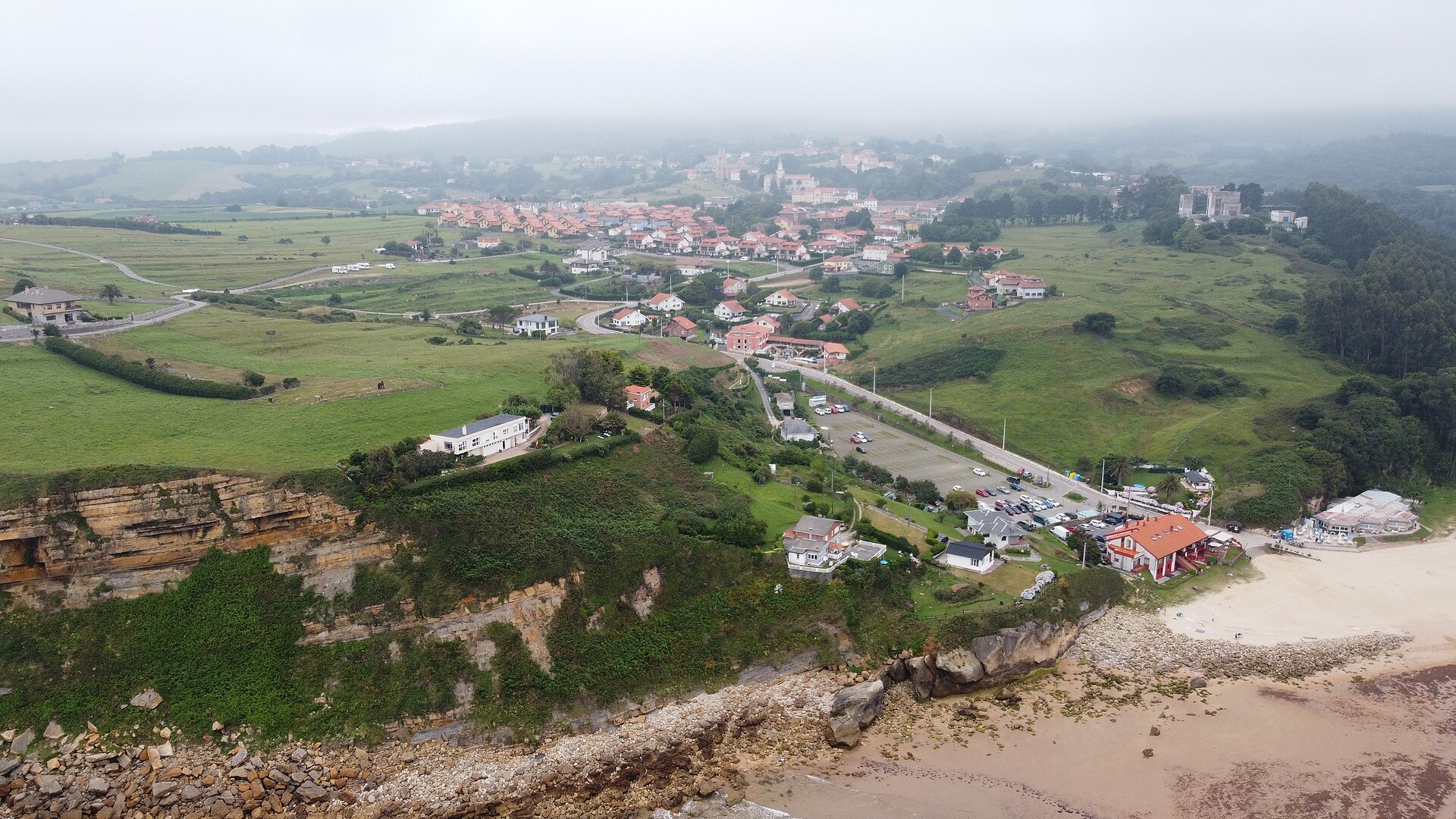
The exterior is enough to appreciate the building’s scale and façade. No opening hours or general permission to enter have been published. If the door is shut, respect the site, do not force entry or cross private land, and do not stop on the carriageway or block residents’ access. The map is indicative and does not guarantee parking. The photograph shows the wider Cóbreces area, not a close view of the hermitage.
Getting there
The municipal catalogue places the hermitage in Luaña, Cóbreces. The map can help locate it within the locality. Check road and walking conditions before leaving; the sources do not describe universal accessibility or nearby tourist facilities.
Get directions with Google Maps ↗
Frequently asked questions
Where is the hermitage?
In the Luaña neighbourhood of Cóbreces, in Alfoz de Lloredo. The urban catalogue identifies this location and the council lists it among Cóbreces’ places of interest.
How old is it?
The 2015 catalogue describes it as an early 20th-century building. Local sources mention an earlier hermitage, rebuilding in 1903 and a photograph from 2010 with an inscription that appears to read 1908. The chronology remains unresolved without primary documentation.
When is San Roque celebrated?
The municipal page gives 16 August. Confirm the programme and specific activities each year.
Can visitors go inside?
No public visiting hours have been found. Ask the parish or council to confirm a particular opening.
Sources
Sources: Consult official source ↗, Consult official source ↗, Consult official source ↗, Consult municipal source ↗, Consult source ↗ and Consult historical photograph ↗.
More to see in Cóbreces
Explore other places in Cóbreces, then return to the Alfoz de Lloredo municipality guide.
- Santa María de Viaceli Abbey ES
- Casal del Castro manor house and chapel
- Villegas Tower House
- Santa Ana Hermitage
Return to Cóbreces ES or explore the whole municipality in the Alfoz de Lloredo municipality guide.