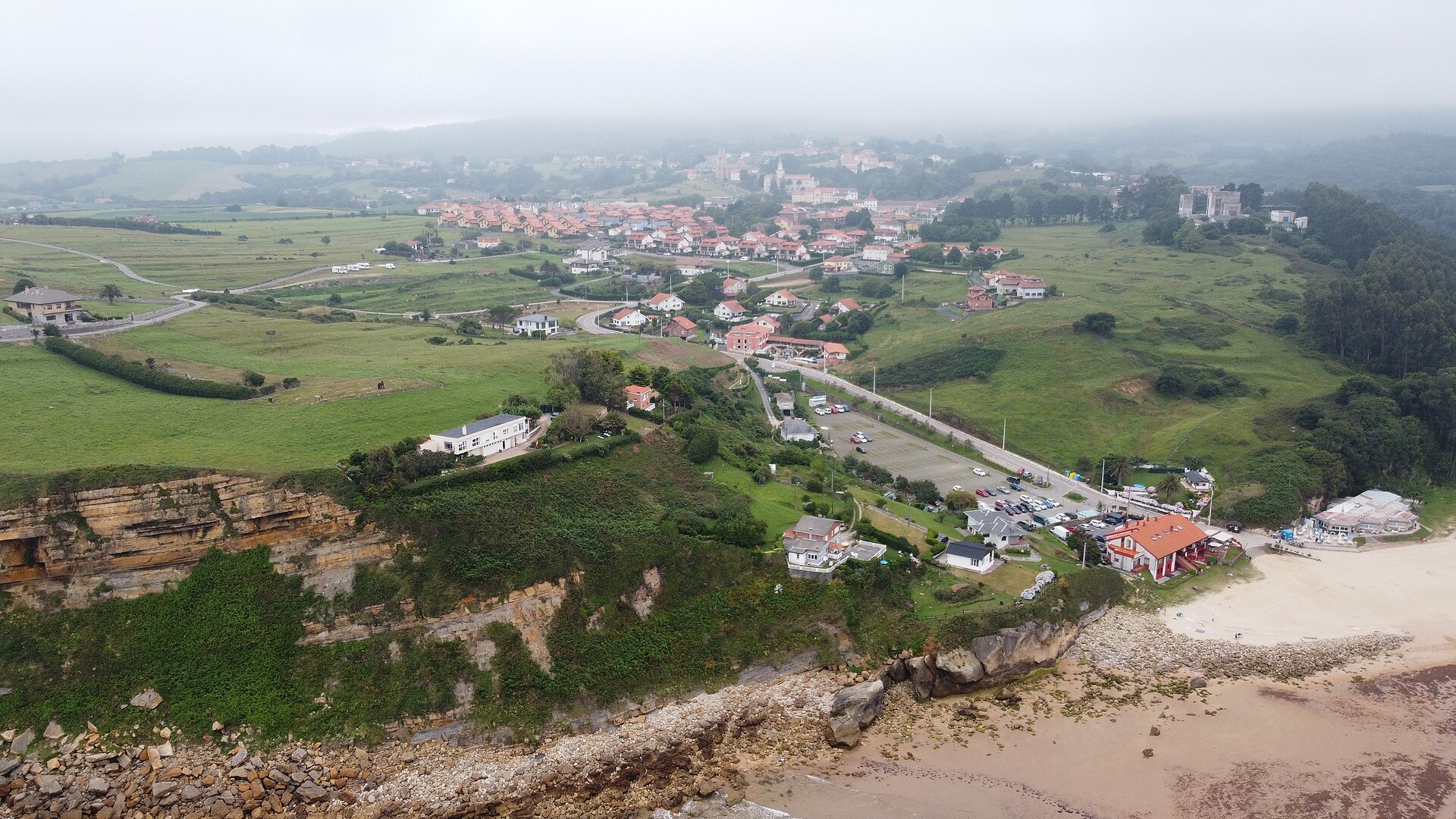
Luaña Beach, also known as Cóbreces Beach, is the main stretch of sand in Alfoz de Lloredo. It lies between meadows and coastal slopes on Cantabria’s western coast and reaches the mouth of the La Conchuga stream, the natural boundary between Alfoz de Lloredo and Ruiloba. The Cóbreces municipal guide and Spain’s official tourism portal describe an approximately 400-metre sandy beach exposed to waves and wind. Sea conditions, services and access change, so check them before travelling.
Key facts
| Place | Cóbreces |
|---|---|
| Municipality | Alfoz de Lloredo |
| Type | Beach |
| Access | From public spaces |
History and features
Preparing for your visit
Check tides, notices and seasonal services before setting out; beach conditions change throughout the year.
Access
Being able to view a place from outside does not mean the building or site is open to visitors. Check its current use and respect private property.
A beach shared by two municipalities
Luaña is linked chiefly to Cóbreces, a village in Alfoz de Lloredo, and also to Ruiloba across the stream. La Conchuga flows into the beach and marks the municipal boundary. Descriptions may refer to Cóbreces, Luaña or Ruiloba depending on the shore and access point. This guide focuses on the part associated with Cóbreces and Alfoz de Lloredo; it does not assign the whole beach or every access point to one municipality.
Alfoz Council includes Luaña among the places in Cóbreces and locates it about one kilometre from the village. Its municipal page describes golden sand, approximately 400 metres in length and 70 metres in width. Spain’s official tourism portal gives the same dimensions and classifies the setting as secluded, with medium occupancy, moderate waves and wind. These are indicative figures from tourism listings; the actual width changes with tides and storms.
The beach has no seafront promenade. Sand, the stream, meadows and coastal slopes shape the landscape. The shoreline changes with the tide, leaving more dry sand at low tide and less space at high tide. Watch the water before settling in and keep a safe distance from cliffs, the stream outlet and any unstable slope.
The La Conchuga stream and coastal landscape
La Conchuga’s mouth is an important geographical feature, not just a landmark. The stream separates Alfoz de Lloredo from Ruiloba and connects fresh water with the sea. Its appearance varies with rainfall, tides and season. Do not cross when the current is strong or assume that wading is always safe.
The surroundings are less built-up than beaches with promenades and buildings along the sand. This open feel depends on the season and visitor numbers. Alfoz’s municipal description places the beach among meadows, reached by road from Cóbreces; here the rural landscape reaches the shore.
Municipal tourism information says the beach is known as Luaña or Cóbreces. The name also appears in nearby neighbourhoods, accommodation and services, so search for both “Luaña Beach” and “Cóbreces” when finding directions. The stream boundary helps avoid confusion on maps or when planning a route from Ruiloba.
Swimming, surfing and safety
Spain’s official tourism portal describes moderate waves and notes that the beach is often windy. The Cóbreces municipal guide also mentions surfing. These general descriptions do not replace the day’s conditions: wind, currents, wave size and water level can change quickly. Check flags and notices, follow lifeguard instructions when the service operates, and do not swim if conditions are unsuitable for your experience.
Lifeguard seasons and rescue services may change each year. No current timetable or coverage for every date is confirmed here. If travelling with children, agree on a meeting point and supervise them near the water and stream. Do not assume an area is safe because other people or surfers are there; check the signs.
Waves may reach the shore with unexpected force, especially in wind or groundswell. Avoid wet, slippery rocks and do not stand beneath unstable slopes or cliffs: rockfall and rising tides can remain hazards on a calm-looking beach. Surfers should use suitable equipment, share the water considerately with swimmers and check local rules and daily conditions.
Access and services: details to check
The Cóbreces guide places Luaña about one kilometre from the village. Spain’s official tourism portal gives car access via road CA-357. Parking, traffic and designated access may change in high season. Follow municipal signs; do not block entrances, rural tracks or emergency vehicle routes.
In 2022, the council announced a 4,000-square-metre park-and-ride area on a nearby plot under a temporary agreement to manage arrivals in July and August. That announcement documents a measure for those summers; it does not prove the area remains available under the same conditions. Check current council information before relying on it or assuming spaces are guaranteed.
Spain’s tourism page lists showers, cleaning, bins, a children’s area, sun-lounger hire and a surfing area, plus nearby businesses. In 2026, the Ministry for the Ecological Transition published a list of services that could apply for permits to occupy part of Luaña, including sun-lounger and parasol hire. A listing or permit does not guarantee a service is installed, open or available on your visit date. Check council notices and beach signs; many services may not operate outside the season.
No current accessibility guide has been verified for step-free routes, boardwalks, adapted toilets or assisted bathing. An old Viajar por Cantabria listing marked the beach as accessible to people with disabilities, but that reference dates from 2013 and cannot confirm today’s conditions. If you need step-free access or assistance, contact the council and confirm which services are operating that day.
Luaña as part of a visit to Cóbreces
Combine the beach with a visit to Cóbreces, treating the coast and village heritage as separate stops. The village has the Cistercian Abbey of Santa María de Viaceli, the parish church of San Pedro Ad Víncula, chapels and historic houses. Not all are open to visitors; check opening times, use and access separately.
The Northern Way of St James crosses Alfoz de Lloredo. The regional guide consulted describes a route between Oreña, Luaña and Ruiloba, but walkers should follow official signs and check the current route. A nearby road or track is not automatically a maintained public footpath. Do not use sand or stream banks as a shortcut if tides or water levels could leave you without a safe way out.
For a relaxed day, check the marine forecast, tide, wind and service information. Bring water and sun protection, take rubbish with you, and respect nearby property and working land. The rural surroundings are part of the Luaña experience and deserve care.
Frequently asked questions
Is Luaña Beach in Cóbreces or Ruiloba?
The beach is associated with both municipalities. The mouth of La Conchuga marks the boundary between Alfoz de Lloredo, where Cóbreces is located, and Ruiloba. This guide covers the part linked to Cóbreces and Alfoz.
How long is the beach?
The council and Spain’s official tourism portal give approximate dimensions of 400 metres long and 70 metres wide. Usable width changes with tides and coastal conditions.
Can you surf here?
Municipal information mentions surfing; the tourism portal describes moderate waves and wind. Check daily conditions and local rules: a general description does not mean the sea is always suitable.
Are there lifeguards, showers and parking?
Services and lifeguard cover depend on the season. Some listings mention showers and parking, and the council announced temporary parking for certain summers. Confirm what is operating now before travelling.
Is the beach accessible?
There is not enough current verified information about boardwalks, accessible routes or assisted bathing. Ask the council about current conditions.
Sources
Sources: Alfoz de Lloredo Council, Our Municipality ↗, Council, Cóbreces ↗, Spain.info, Luaña Beach ↗, Council, temporary parking announcement ↗, MITECO, 2026 seasonal-services permits ↗ and Cantabria Official Gazette, lifeguard and rescue service ↗.
Continue your visit
Discover other places in the Cóbreces guide ES and consult the Alfoz de Lloredo guide to explore the municipality’s seven villages.
More to see in Cóbreces
This page is part of the Cóbreces guide, where you can find the other places, routes and celebrations associated with this village.
- Cistercian Abbey of Santa María de Viaceli ES
- Casal del Castro and chapel
- Villegas Tower House
- Chapel of San Roque
Return to Cóbreces ES or to the whole municipality of Alfoz de Lloredo.
Sources: View source ↗ and View source ↗.