Don Borja Tower in Santillana del Mar
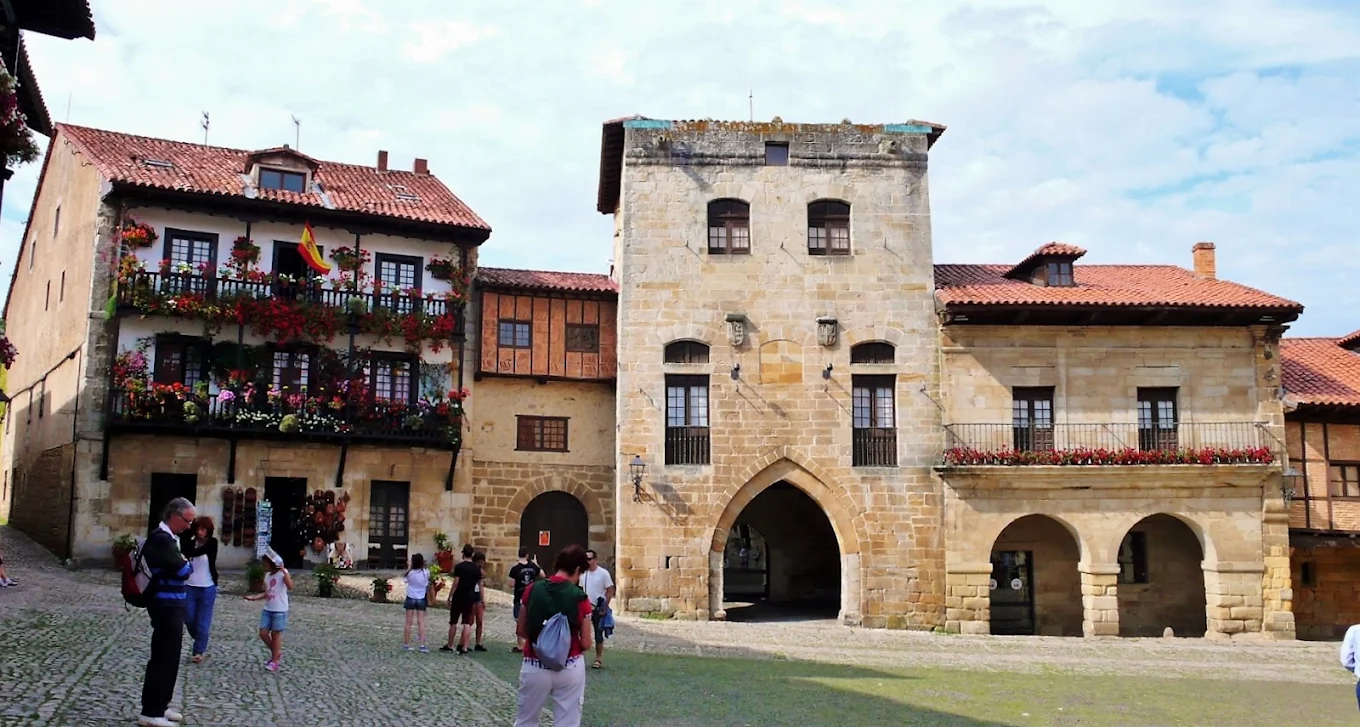
Don Borja Tower is one of the most important civic buildings in Santillana del Mar, on Plaza de Ramón Pelayo — formerly Plaza del Mercado — beside the Merino Tower and the Town Hall. It is a medieval fortified house whose surviving fabric dates mainly from the fifteenth century, with substantial additions in the sixteenth. For centuries it was associated with the Barreda family; it later belonged to the Güell family, Infanta Paz of Bourbon — daughter of Isabella II — and María de las Mercedes of Bavaria and Bourbon. In the late 1970s, when the building was in ruins, Jesús Polanco and Francisco “Pancho” Pérez González acquired it as the headquarters of the Santillana Foundation. In 2019 it was restored again and became the cultural centre devoted to art, publishing and communication that it is today.
In fact, there are two towers
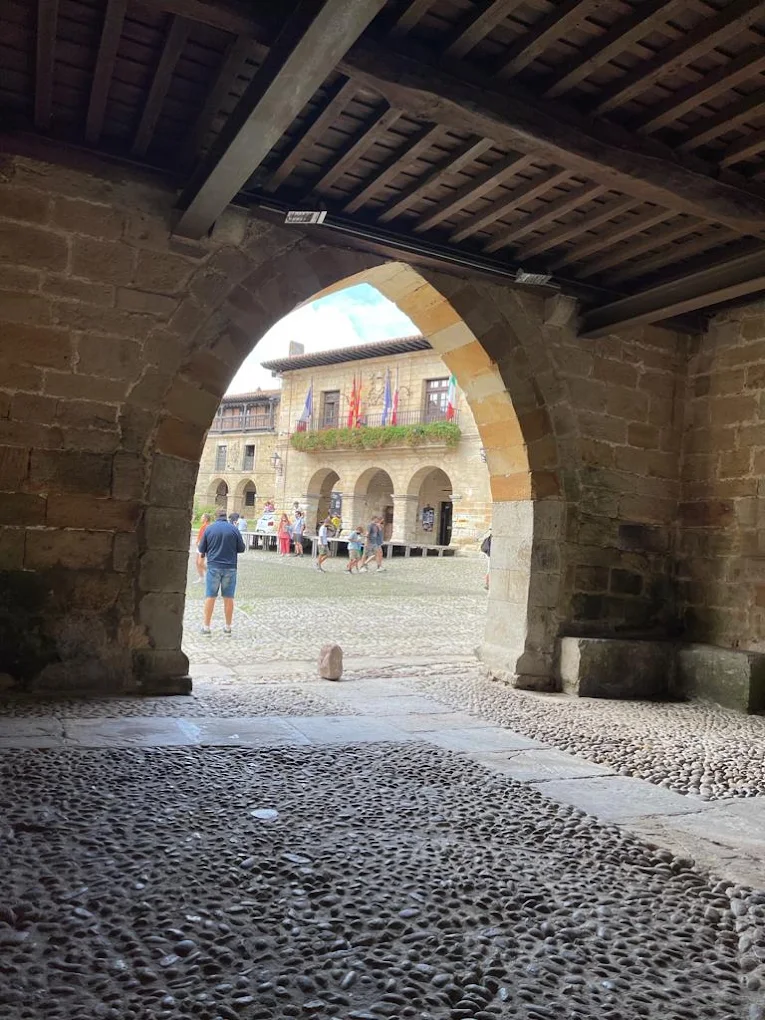
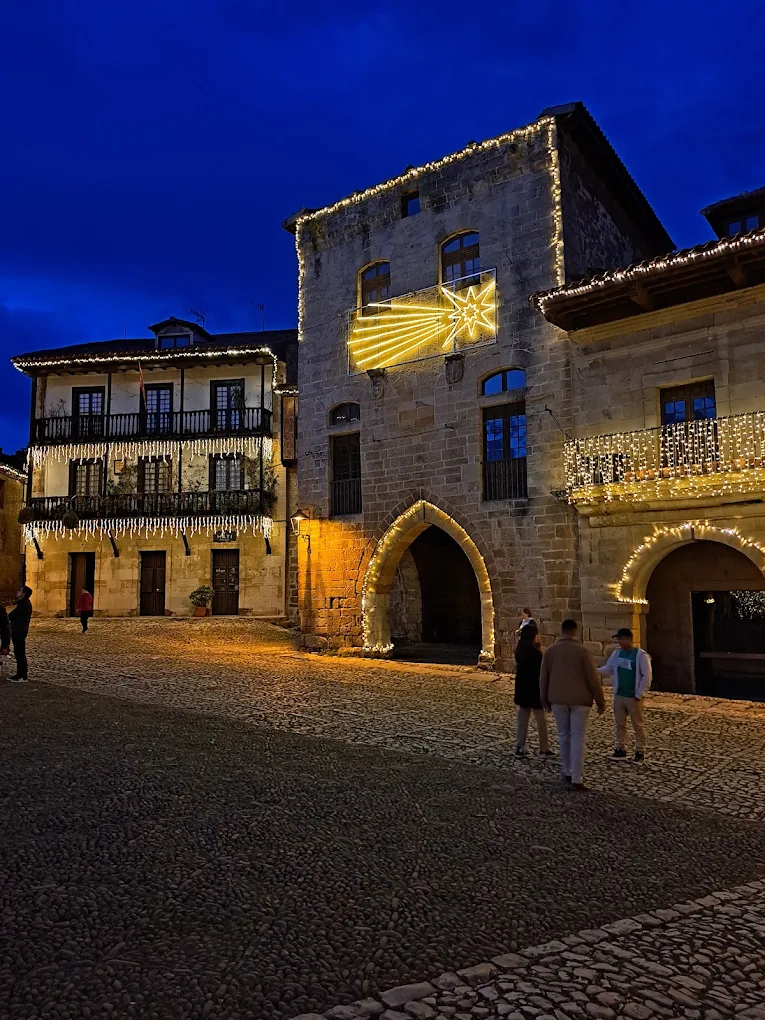
The complex is not a single building. The main tower, visible from the square, and a second rear section — also from the fifteenth century, though slightly later — were joined in the sixteenth century by an inner courtyard, an unusual solution for this type of Cantabrian fortified manor. The main façade is built of ashlar, has three storeys and a hipped roof, and retains two small Barreda coats of arms. Its entrance portico has been substantially altered over the building’s history.
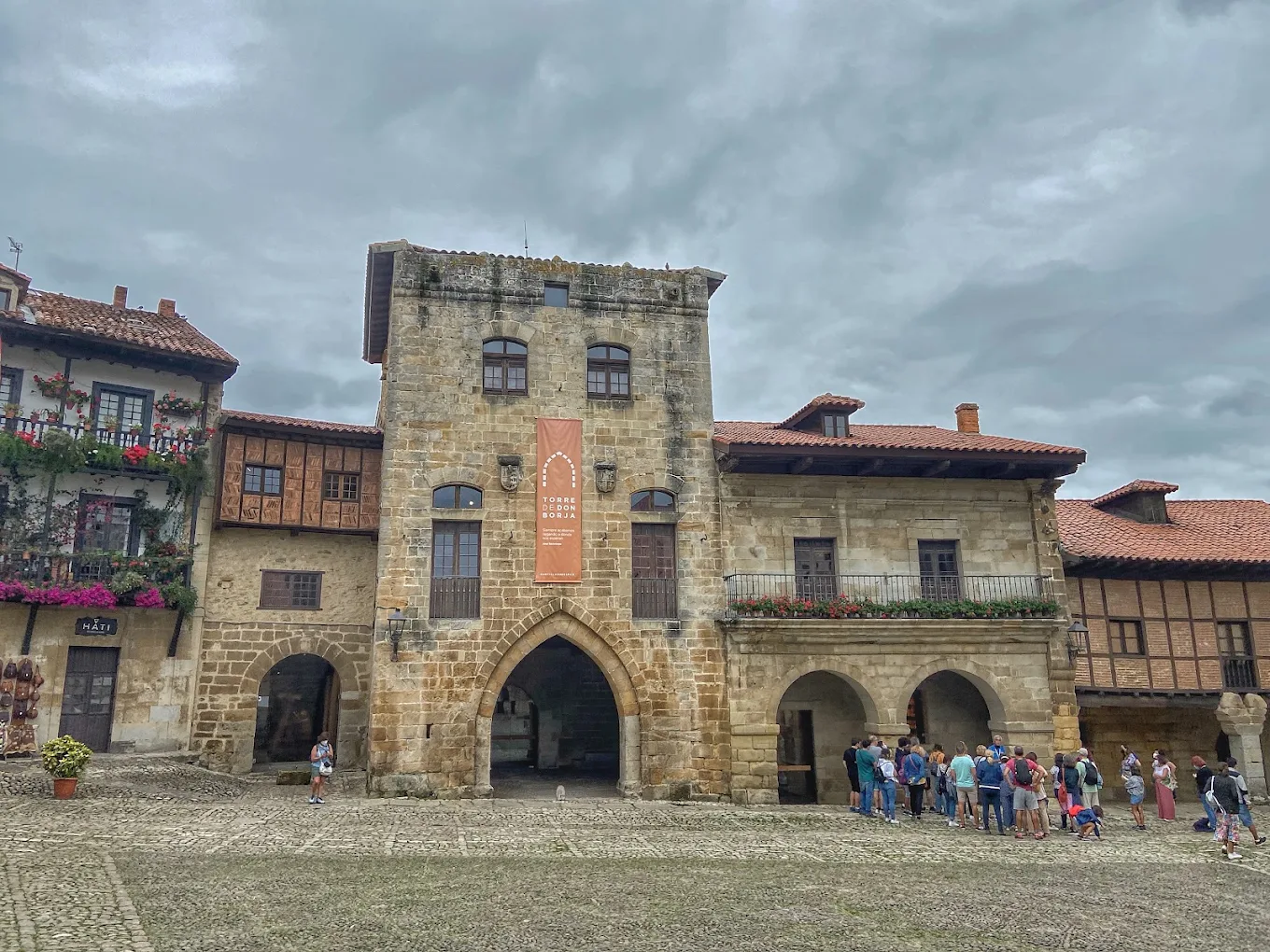
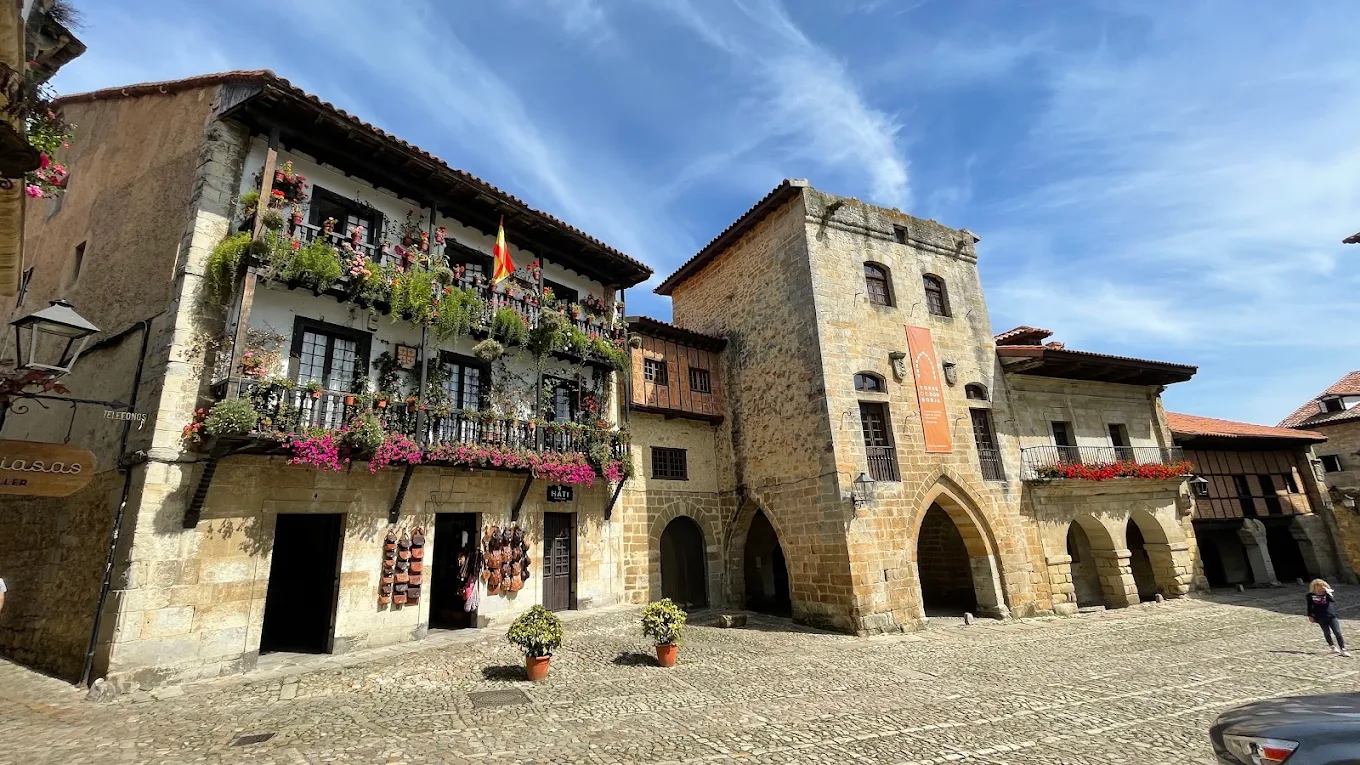
Who was Don Borja?
The name can easily be misleading: Francisco de Borja Barreda did not build the tower. He was the last holder of the family entail, associated with the year 1844 — several centuries after the building was erected. When the entail system was dissolved during the nineteenth century, his name remained attached to his family’s old fortified house.
From the Barreda family to Infanta Paz
The tower passed from the Barreda family to the Count of Güell, who gave it in 1927 to Infanta Paz of Bourbon, daughter of Isabella II — hence its other name, the Tower of the Infanta. It was later associated with María de las Mercedes of Bavaria and Bourbon. The present cultural project preserves the former reception rooms used by the Infanta and a historic library assembled by her and her heirs: within one building, visitors can move from the fifteenth century to Bourbon history in the nineteenth and twentieth centuries.
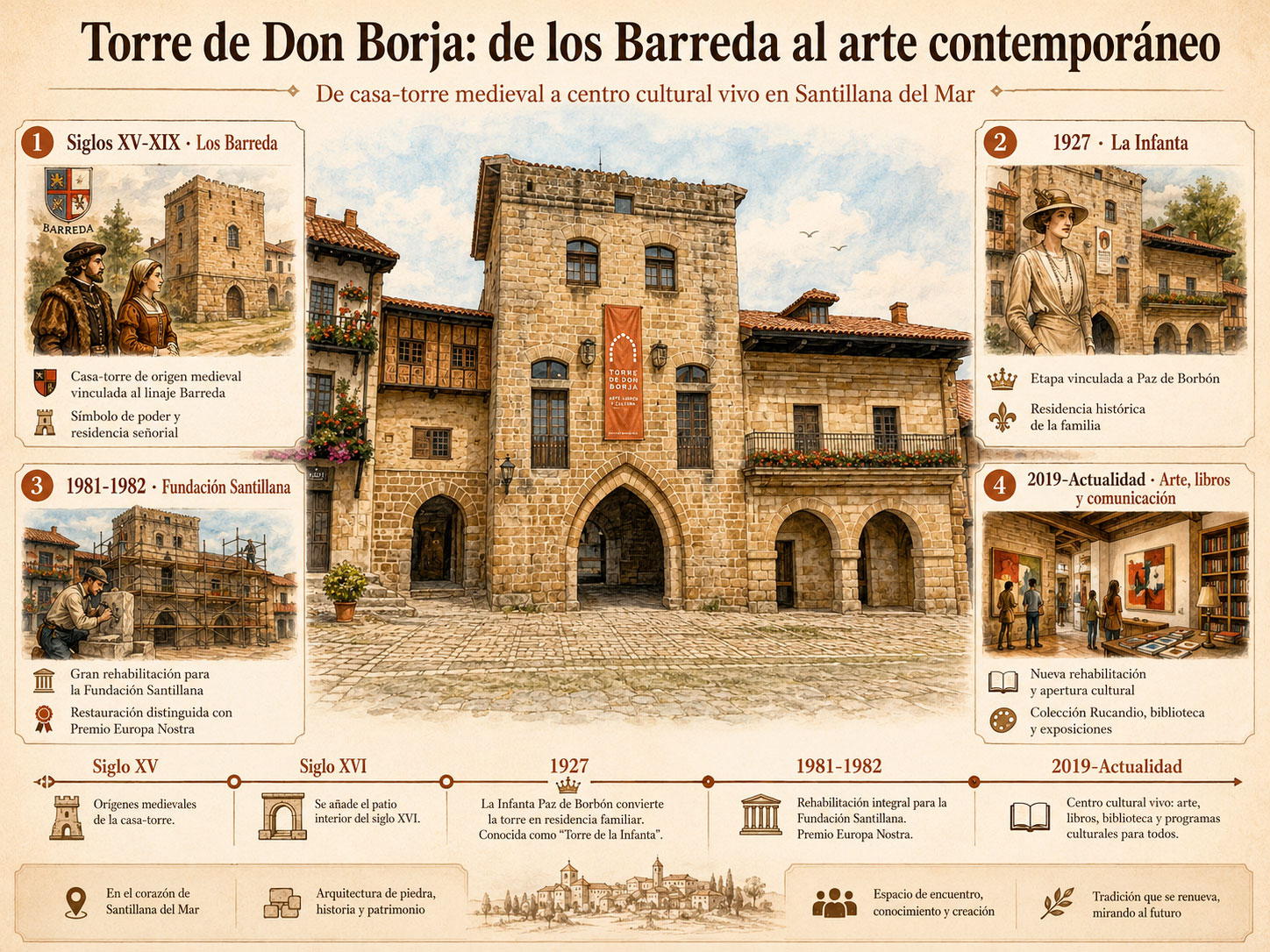
The story of Don Borja Tower, from its time as the Barreda family’s fortified house to its conversion into a residence associated with Infanta Paz of Bourbon, the Santillana Foundation headquarters and today’s centre for art, books and communication.
From ruins to the Santillana Foundation
By the late 1970s the tower was in ruins when Jesús Polanco and Pancho Pérez González — influential figures in Spanish publishing and communications and founders of Santillana publishing house, El País and PRISA — acquired it to establish the Santillana Foundation there in 1979. A major restoration led by architects Luis Castillo Arenal and Eduardo Fernández-Abascal in 1981–82 received the Europa Nostra Award for treating the building as a historical document: irregularities and traces of age were preserved instead of imitating a “brand-new” appearance. For four decades the tower hosted major exhibitions, including a 1988 show on Catalan Modernisme with works by Rusiñol, Casas and Anglada-Camarasa.
2019: a new chapter
In 2019, architect Luis Castillo returned to the tower, almost forty years after the first restoration, for a second intervention that shaped its present direction. It is no longer simply the Santillana Foundation headquarters but an independent cultural project — promoted by the Polanco and Pérez Arauna families and owned by Timón S.A. — built around three pillars: art, publishing and communication.
The Rucandio Collection and the Ibero-American library
The artistic heart of the project is the Rucandio Collection, begun in the 1960s by Jesús Polanco and Isabel Moreno and expanded by their descendants to include more than 300 works of contemporary Spanish art. Artists include Jaume Plensa, Jorge Oteiza, María Blanchard, Miquel Barceló, Juan Genovés and Jesús Otero. The works are displayed alongside historic walls, furniture and medieval architecture rather than in conventional white galleries. The centre also houses the Ibero-American library of Pancho Pérez González, with more than 15,000 volumes, and spaces devoted to El País, Cadena SER and Canal+, tracing major cultural and media changes in democratic Spain. Temporary exhibitions change regularly; in 2026, for example, the tower opened ELLAS, devoted to women’s artistic creation. Check the current programme before visiting.
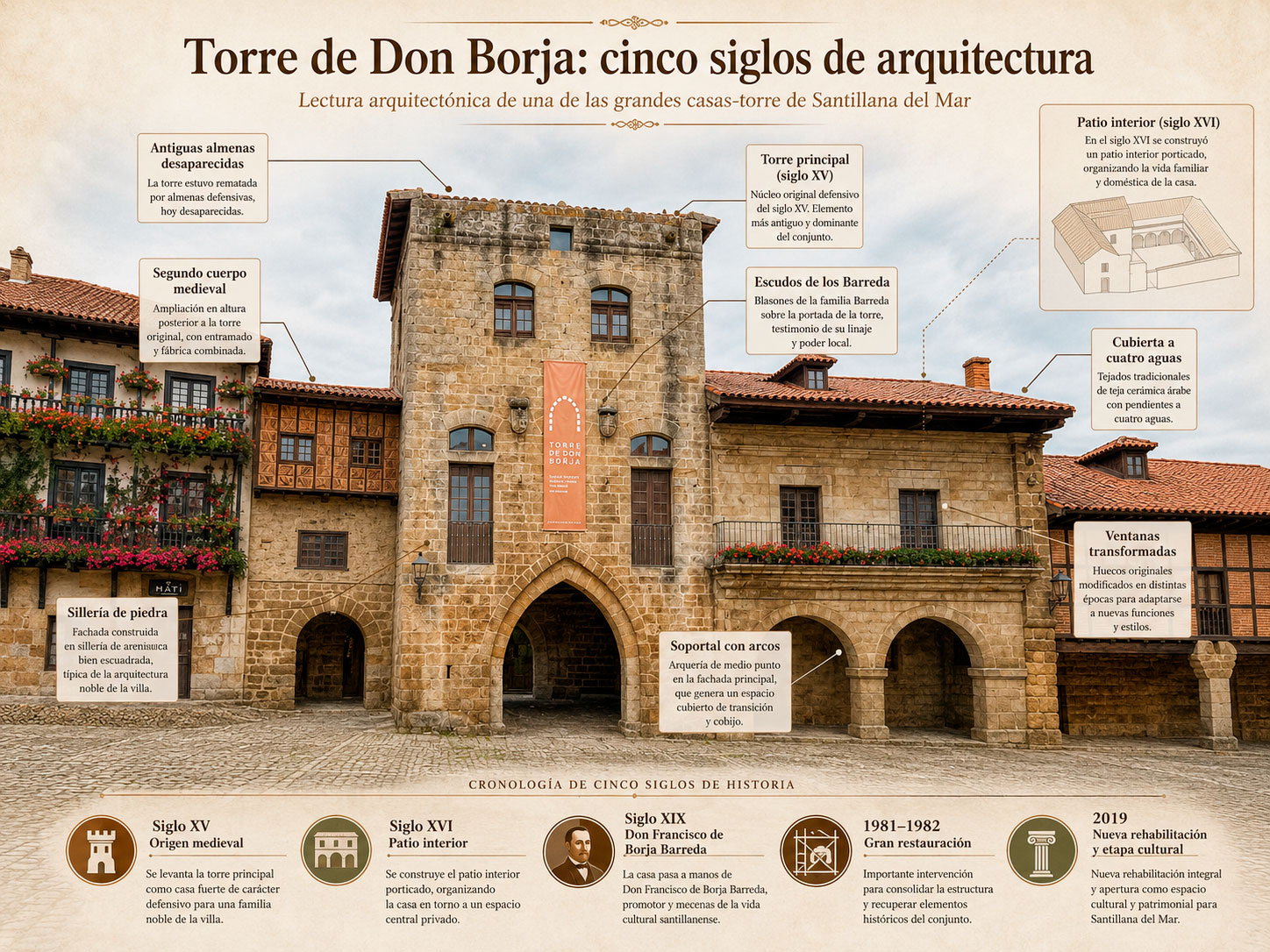
Architectural illustration of Don Borja Tower in Santillana del Mar, showing its main features and the building’s evolution from a fifteenth-century fortified house to its contemporary restoration.
Visits, opening times and conditions
Access is by guided tour, which lasts about one hour. The information available for this guide states that visits are free, but arrangements should be checked before travelling. Availability varies by season, with a fuller programme in summer; the listed booking contact is +34 699 265 469 or contacto@torrededonborja.es. The official visit page currently available online still lists 2023–24 opening times, so confirm current access arrangements by phone or email before setting out. For safety reasons, children under 12 are not admitted and the historic building is not accessible to visitors with reduced mobility.