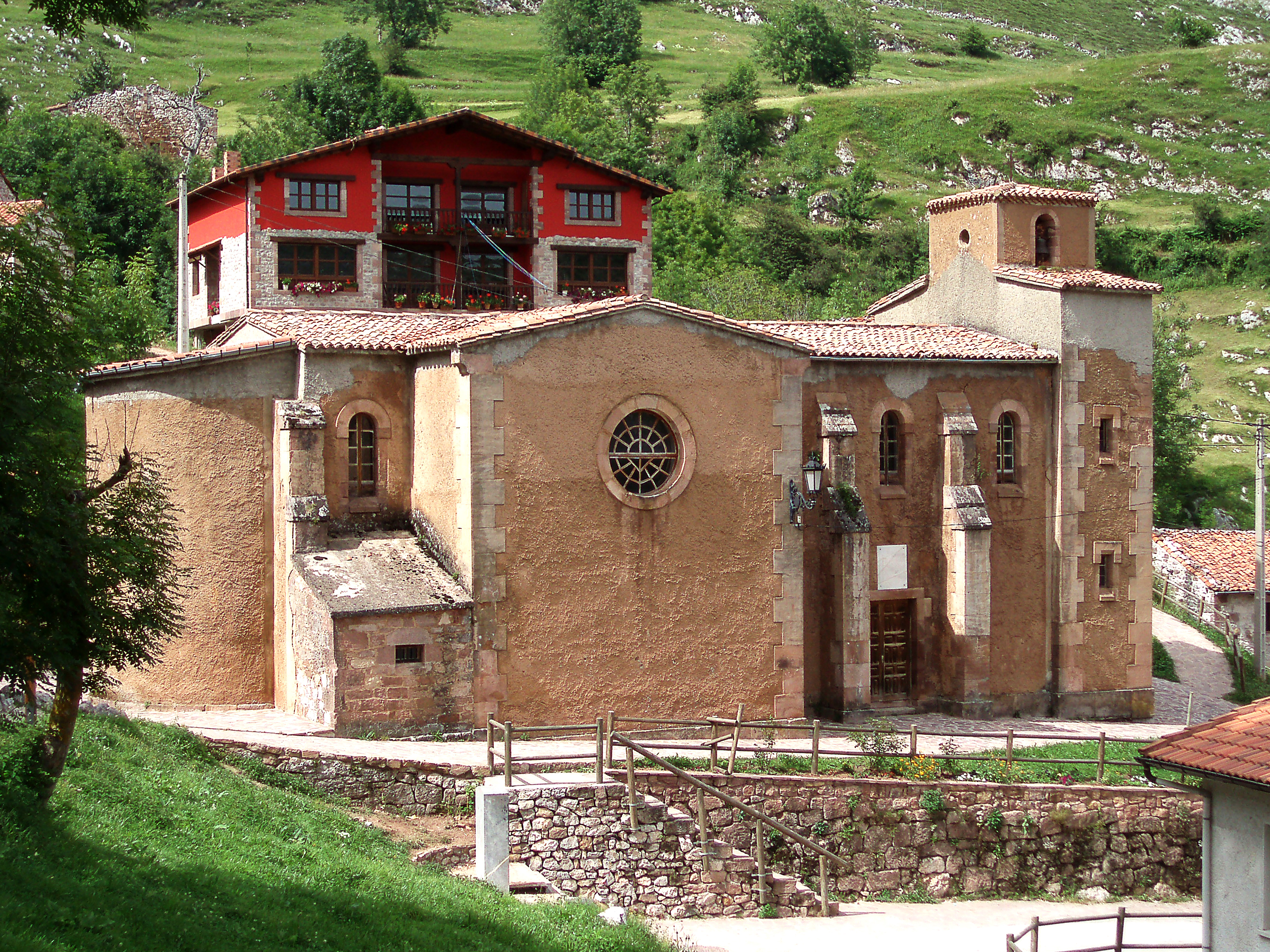
The church of Tresviso is identified by the diocesan source as the parish of San Andrés. The Archives Census Guide records parish documents from 1723; this confirms the existence of a documentary collection, not the date of the present building.
At a glance
| Place | Tresviso |
|---|---|
| Municipality | Tresviso |
| Type | Heritage |
| Access | Exterior; ask about interior visits |
History and details
An older listing attributed the church to a 1904 building erected over an earlier chapel and described its architecture. We have not found sufficient independent heritage evidence to repeat those details as established fact. This guide retains the historic name in the page address while distinguishing the confirmed parish dedication from details that remain unverified.
Planning a visit
Religious use does not mean tourist access or guaranteed opening. No confirmed worship hours or access coordinates are published here.
Access
An exterior view does not guarantee that the building or grounds are open to visitors. Check current use and respect private property.
The parish of San Andrés
The Spanish Episcopal Conference directory identifies Tresviso’s parish as San Andrés. It also gives postcode 39580 and a parish telephone number. This confirms the parish name and provides an institutional contact; it does not publish sightseeing hours or guarantee the church will be open when you arrive.
The name needs clarification. Some older pages called the building “Church of San Pedro” and attributed the present church to an 18th-century chapel and a 1904 construction. The diocesan directory consulted calls the parish of Tresviso San Andrés. We have not found an independent heritage source confirming the date, architectural origins or dedication of an earlier building. This page keeps the historic URL title, but identifies the current parish as San Andrés and does not repeat those claims as proven facts.
What the records can tell us
The Ministry of Culture’s Archives Census Guide lists the Archive of the Parish of San Andrés in Tresviso, with records beginning in 1723. This proves that the parish had a documentary record in the 18th century. It does not prove that today’s building already existed, nor does it date its walls, tower or a particular renovation. An archive can predate the building that currently houses it; the two timelines must be kept separate.
An archived capture of the old Viajar por Cantabria page attributes the current church to 1904 and describes an earlier Chapel of San Pedro. That capture shows what was previously claimed, but it cites no documentary source that verifies it. Later pages repeat the same text and attribute it to the old website, so they are not independent corroboration. Until parish records, an official heritage catalogue or historical research supports the claim, the construction date, sequence of buildings and architectural features remain unconfirmed.
This review has also found no accessible institutional heritage record confirming a specific legal protection for the building. The absence of such a record among the sources reviewed does not prove that no protection exists. It means that no category should be claimed without checking the current register and its scope. This guide does not infer legal status, age or style from a photograph or copied description.
The available photograph and its limits
A photograph by Jacinta Lluch Valero, taken in July 2008 and published on Wikimedia Commons under a CC BY-SA 2.0 licence, identifies the exterior of Tresviso’s Church of San Andrés. The image shows the façade, a tower and a circular oculus. It is a dated visual reference, not an architectural survey, condition inspection or proof that visitors can enter.
The photograph does not confirm the building’s present condition, visitor access or the use of every room. It is presented as an archive image with its author and licence credited. The description here is limited to features visible in the photograph and does not add unverified materials, styles or construction phases.
A parish connected with the Feast of San Pedro
Dated accounts of the Feast of San Pedro help explain the church’s place in local life, but they do not settle the building’s architectural history. A 2009 report based on information from the Government Delegation describes Mass and the procession of the Ramu. A 2016 account says that, despite rain, the image of San Pedro was carried in procession after Mass; it also notes that damp conditions made climbing the jovera dangerous. A 2019 report again places songs and a procession around the church.
These accounts show the church as a setting for religious events associated with documented celebrations. They do not prove that the same programme takes place every year, and they do not replace the diocesan directory when identifying the parish dedication. The Feast of San Pedro and the Parish of San Andrés are distinct references, although both belong to life in Tresviso.
Cantabria’s 2026 working calendar lists San Pedro on 29 June and San Andrés on 30 November as local holidays for “Tresviso, la Villa de San Pedro”. These are approved holidays for that year, not a worship calendar, public events schedule or proof of the church’s dedication. For service times or events on a particular date, contact the parish or local organisers directly.
Visiting respectfully
The church is an active parish, not a museum with confirmed regular hours. The Spanish Episcopal Conference directory lists 985 846 713 as the parish telephone number. Contact the parish to ask whether there will be a service, whether visitors may enter and what rules apply. This guide does not publish unverified hours or promise interior access.
If the church is open, do not interrupt a service, ask before taking interior photographs and follow the community’s instructions. Religious objects, images and working areas are not exhibition pieces. The exterior may be viewed from accessible public areas without crossing barriers or entering private property.
The church’s position in the village makes it possible to include in a walk around Tresviso, but that does not mean there is a signed trail or guided tour. Road access, weather and local services can change. See the locality page to place the parish in the village and the municipal guide for the wider area.
Frequently asked questions
What is Tresviso’s parish called?
The Spanish Episcopal Conference identifies the parish as San Andrés. This page retains its historic generic URL title, “Parish Church of Tresviso”, to preserve the permalink.
Was the present church built in 1904?
That date appears in an older listing which cites no verifiable primary source. The records reviewed confirm a parish archive from 1723, but that does not date the current building. Its construction date remains unverified.
Is it the Church of San Pedro?
The old website used that title and linked the building to a Chapel of San Pedro, but this name has not been independently confirmed. The diocesan directory consulted identifies the parish as San Andrés.
Can I visit inside?
No tourist opening hours have been confirmed. The Spanish Episcopal Conference lists the parish telephone number 985 846 713; call before travelling and follow the community’s guidance.
More to see in Tresviso
This page is part of the Tresviso guide, which lists other places, routes and celebrations in the village.
- PR-PNPE 17: Tresviso surroundings route
- PR-PNPE 30: Urdón to Tresviso trail
- PR-PNPE 29: Pasá de Picayo
- PR-PNPE 34: Sierra de Cocón, from Oceño to Tresviso
Return to Tresviso or the municipality of Tresviso.
Sources: Spanish Episcopal Conference parish directory ↗, Ministry of Culture Archives Census Guide ↗, Cantabria local holiday calendar for 2026 ↗, 2009 account of San Pedro and the Ramu procession ↗, 2016 account of San Pedro ↗ and 2019 local report ↗.