A visit to understand the Besaya corridor
The Caminos de la Harina Visitor Centre occupies part of La Montañesa, the former flour mill in the Ventorrillo neighbourhood. Its purpose goes beyond displaying old machinery: it explains why the Besaya valley was for centuries one of the main links between Castile and the port of Santander. The Cantabrian Environmental Research Centre (CIMA), which presents the site to the public, describes an interpretation route featuring the mill’s equipment and installations, images, audiovisual material and information about the succession of paths, railway lines and roads. It is a useful introduction before or after visiting the historic routes nearby.
It is important to distinguish the visitor centre from the building that houses it. This page focuses on the interpretation experience and how to make the most of a visit; the separate page on La Montañesa ES examines the mill’s history and operation. They share a site but answer different questions. At the centre, the landscape becomes a story: why was a flour mill built here? What linked Castilian wheat to the Besaya? How did transport change with carts, the railway and roads? The surviving machinery gives concrete answers.
What the exhibition explains
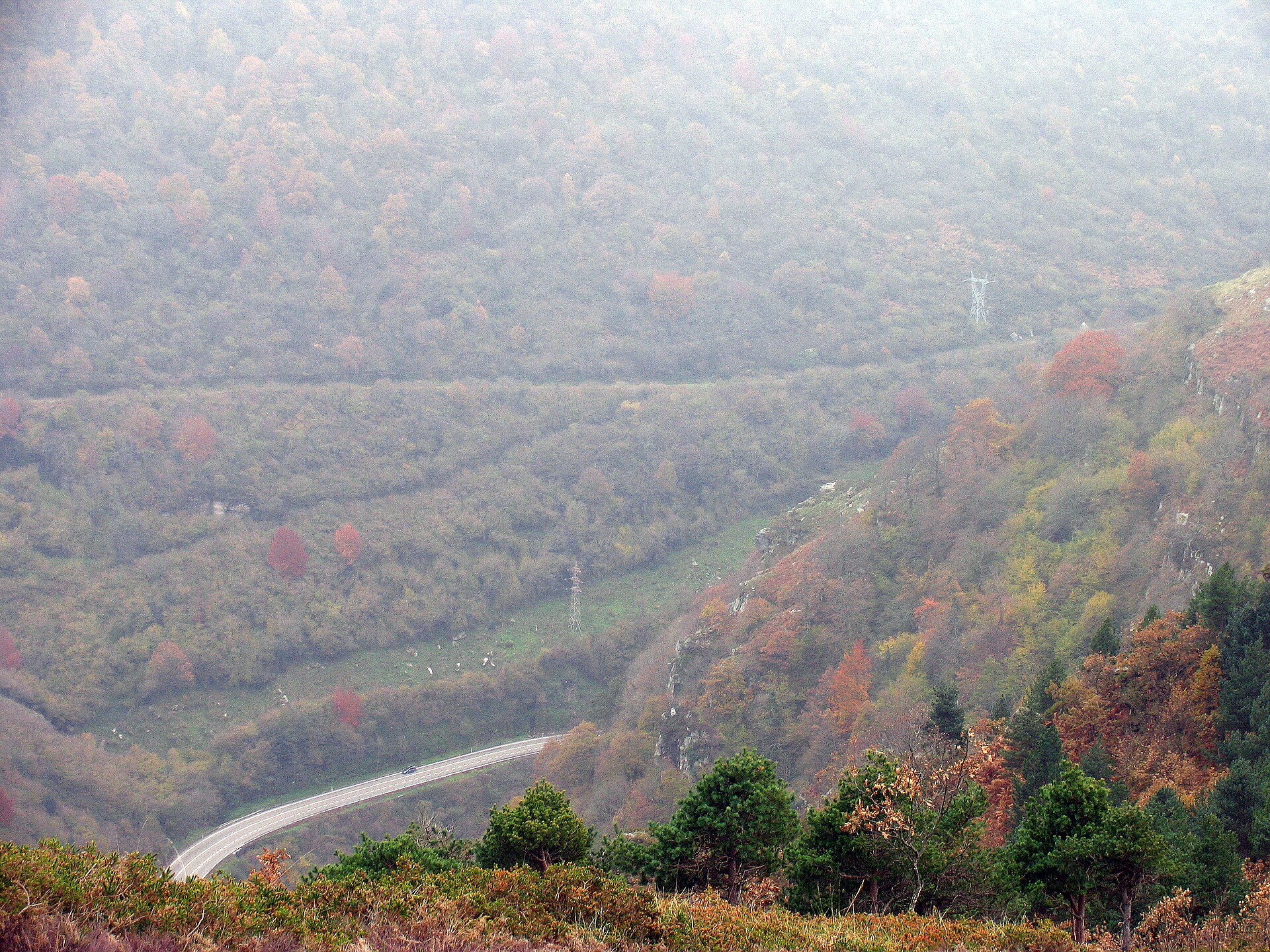
The interpretation begins with a simple geographical fact. To connect the plateau with the coast, travellers had to overcome changes in elevation, find passages through the gorges and follow a river that could provide power. The Pesquera area preserves several historical responses to this challenge. The so-called Roman road has a paved stretch from Somaconcha towards Pie de Concha; its heritage name does not, on its own, settle debate about the age of every visible section. The 18th-century Camino Real offered a route better suited to carts. The railway came later, followed much later by modern roads and the A-67 motorway. The centre’s images and audiovisual material help visitors place each route in context without confusing their dates or alignments.
The University of Cantabria explains that transporting grain to Santander was slow and costly. Milling it along the way and continuing with flour could be more economical. The Camino Real, opened between 1749 and 1753, encouraged this trade; the corridor eventually became known as the “Roads of Flour”. Mills used the Besaya’s water, and some developed into factories with specialised machinery. La Montañesa is one example that tells this story in a building directly connected to it.
CIMA notes that flour mills became important from the late 18th century and that their hydraulic works helped prepare the valley for later industrialisation. This does not mean that the surviving factory dates from the 18th century. Research by Luis Villegas Cabredo places an earlier mill in that period and the factory configuration of La Montañesa in the early 20th century. Keeping the earlier mill separate from the present industrial building is one of the key distinctions to take away from the visit.
From wheat to flour: three stages to look for
An official guide to the visitor centres presents three stages of the process: cleaning, milling and sifting. Cleaning removed stones, dust and other impurities before the grain reached the crushing equipment. Milling broke the wheat; sifting then separated the resulting products by size and quality. The flour was finally bagged and stored for transport. Seeing the machinery in its setting makes clear that this was not a single millstone or an instant task, but a coordinated chain of operations.
A technical publication about the Besaya’s hydraulic works describes a turbine at La Montañesa and equipment for classifying and milling grain with rollers. Water powered the production system; it was not merely part of the scenery. The same publication identifies a weir that diverted part of the flow, a millrace that carried it to the factory and a tailrace that returned it to the river. When looking at plans, photographs or displayed components, trace the relationship between these elements. It helps explain why the building stood beside the Besaya rather than elsewhere in the neighbourhood.
Official sources refer to recovered original machinery, as well as a restoration intended to make the equipment understandable and accessible. Ask staff which components came from the mill and which were restored, completed or adapted for demonstration. If a demonstration is offered on the day, it can illustrate the process; it does not mean that the factory still produces flour as an ordinary business. The former industrial activity and the present educational use belong to different periods.
How to make the most of a visit
One way to follow the exhibition is to begin with the map of communications and then move on to the machinery. If you are visiting with children, follow the imagined journey of a sack of wheat: where did the grain come from, how was it cleaned, what powered the mechanisms, what did milling produce and where did the flour go next? Visitors interested in industrial heritage can look more closely at the transmission of movement, the different floors or work areas, and the relationship between the mill, the weir and the channels.
Look beyond the exhibition rooms too. Ventorrillo grew alongside movement through the valley, and the University of Cantabria links the layout of the settlement to the Camino Real. The centre is not an isolated museum without a surrounding story: the neighbourhood, the river and the route towards the Hoces del Besaya are all part of its context. The Camino Real through the gorges lets visitors see a protected stretch of the historic road. The Somaconcha paved road offers a different interpretation, with its own route and walking conditions.
If you have little time, visit the centre and then walk along the public streets of Ventorrillo ES. If you want to hike, choose one route, check its course and plan your return. Historic routes continue beyond Pesquera, and some suggested circuits include sections of road: the University guide specifically warns that the N-611 has a narrow shoulder. The visitor centre helps explain these routes but cannot replace safe planning for walking them.
Opening, contact and activities
CIMA’s official calendar publishes seasons, opening hours and the telephone number for Caminos de la Harina: +34 669 609 285. Opening can change because of programming, public holidays or circumstances at the centre, so check that page or call before travelling. Some activities require separate registration; confirm the conditions of the specific event. PDF guides from previous seasons still circulate online and are not reliable confirmation of opening on the date you plan to visit.
Cantabria’s environmental programme has used the centre as a meeting point for interpretive walks, including outings towards the historic road. This reinforces its role as a gateway to the landscape, but one scheduled activity does not prove that the building opens every day. If the centre is closed, you can still view the surroundings from public places and consult CIMA’s information. Do not enter through service areas or walk along channels and riverbanks outside authorised routes.
Other places in Pesquera
This visitor centre is part of the wider guide to Pesquera and the Besaya corridor. You can continue with the La Montañesa mill ES, the Besaya gorge landscape ES, or return to Ventorrillo ES and the Pesquera municipal guide.
Sources: Consult source ↗, Consult source ↗, Consult source ↗ and Consult source ↗.